Proudly serving Phoenix, Mesa, Glendale, Scottsdale, Tempe, Chandler & surrounding areasCall or Text 24/7: 602-449-8143
Aerial view of residential neighborhoods, desert washes, and low-rise buildings in Phoenix, AZ.

Fire Alarm System Installation & Code Compliance Testing in Peoria, AZ

Phoenix Fire Alarm Systems provides fire alarm system installation, commercial systems, inspection and testing, and monitoring for properties in Peoria, Arizona. We also handle repair, maintenance, system design, replacements and upgrades, panel service, and voice evacuation or mass notification systems. Our licensed installation team works with offices, retail centers, warehouses, multi-tenant properties, schools, and mixed-use buildings. Property owners can keep design, installation, testing, and ongoing support with one local fire alarm company.

Peoria grew from 154,065 residents in 2010 to 190,985 by the 2020 census, and its footprint is the sixth-largest by land area in Arizona across Maricopa and Yavapai counties. That growth leaves property owners managing both new construction and buildings from older code cycles. Desert dust can accelerate sensor fouling in photoelectric detectors, while varied wiring conditions complicate retrofits. We account for occupancy, ceiling height, airflow, and building use so detectors, notification appliances, panels, and wiring are planned for reliable operation and city review.

Our bonded and insured fire alarm company coordinates permitting, plan review, inspection scheduling, and final documentation. Request an estimate to scope a Peoria installation, retrofit, repair, or compliance project.

★ ★ ★ ★ ★4.9/5 Average Rating - 20+ Years of Experience - Peoria Fire Alarm Systems Specialists - Residential & Commercial
Fire Alarm Services

Fire Alarm Services in Peoria, AZ

Choose coordinated fire alarm design, installation, inspection, monitoring, repair, and maintenance for Peoria properties ranging from Old Town retrofits to Vistancia construction. We work around Arrowhead Towne Center, Peoria Sports Complex, North Peoria, South Peoria, and the city's commercial corridors. The same full-scope fire alarm support is available in nearby Surprise, AZ .

Fire Alarm System Installation

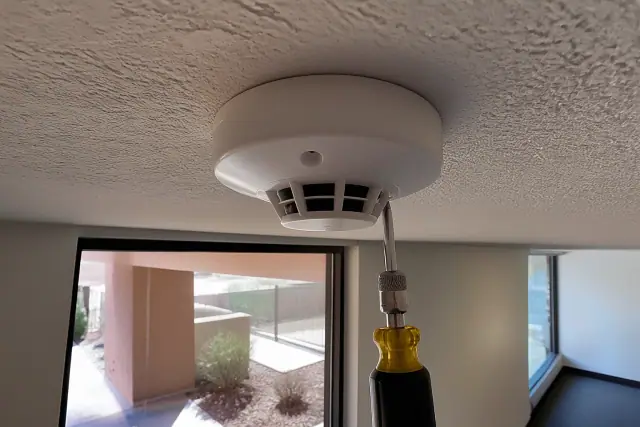
Smoke detection sensor being mounted to a commercial ceiling junction box in Peoria, AZ.

New construction and retrofit installations begin with a site walk, occupancy review, and system layout. We carry the project through shop drawings, city plan review, rough-in wiring, device installation, programming, testing, and final inspection.

Explore Service

Commercial Fire Alarm Systems

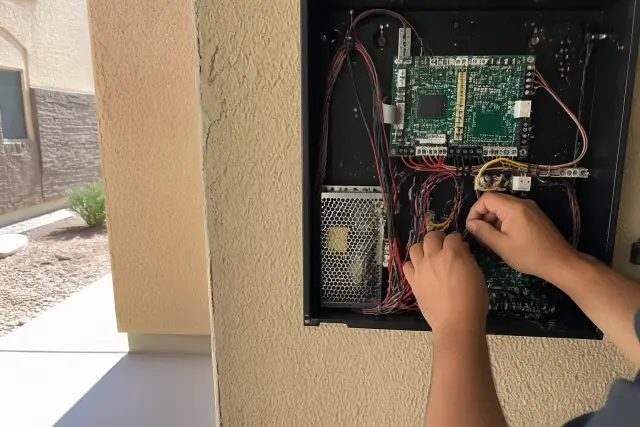
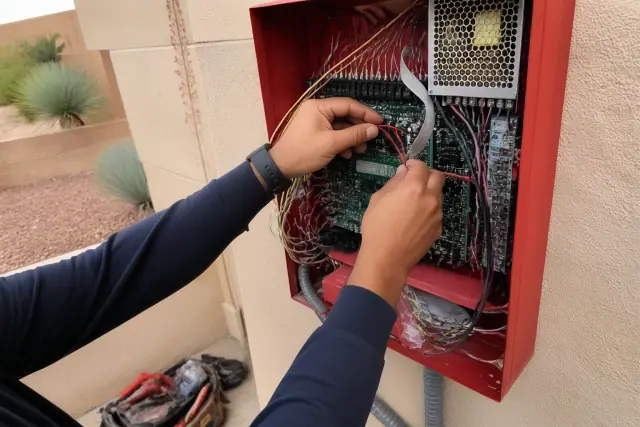
Technician wiring a fire alarm control panel inside a building in Peoria, AZ.

We design commercial systems for offices, retail centers, warehouses, and multi-tenant buildings. Typical installations run $15,000 to $200,000 depending on square footage, detector count, and panel complexity, with addressable panels used to identify the exact zone in alarm.

Explore Service

Fire Alarm Inspection & Testing

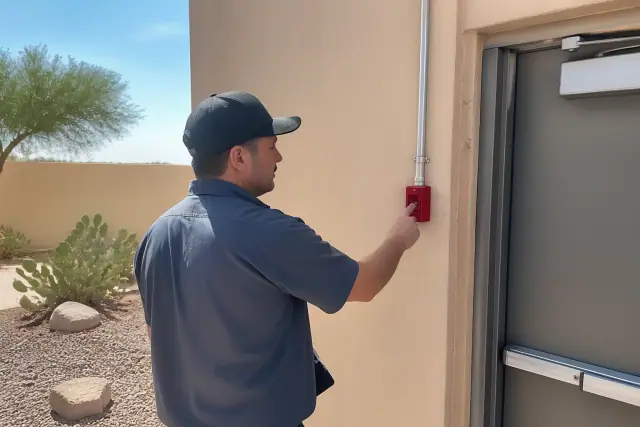
Technician inspecting a red fire alarm pull station on a stucco wall in Peoria, AZ.

NFPA 72 calls for annual fire alarm testing, while some devices require quarterly or semi-annual checks based on occupancy. We test initiating devices, notification appliances, panel batteries, and monitoring connections, then provide records for city and insurance needs.

Explore Service

Fire Alarm Monitoring

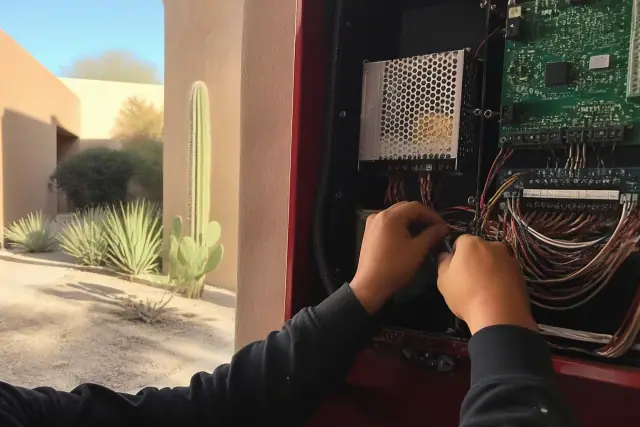
Technician wiring a fire alarm control panel inside a building in Peoria, AZ with desert landscaping visible outside.

Monitoring connects the fire alarm panel to a UL-listed central station for 24/7 signal response and Peoria Fire-Medical dispatch. Cellular, IP, and traditional phone-line paths are available according to the building's infrastructure and backup requirements.

Fire Alarm Repair & Troubleshooting

Technician repairing a fire alarm control panel circuit board at a building in Peoria, AZ.

Troubleshooting covers ground faults, addressable-loop dead zones, nuisance trouble signals, failed smoke or heat detectors, and panel faults that can cause false alarms. Diagnosis focuses on restoring dependable operation without leaving an occupied commercial building with a disabled system.

Fire Alarm Maintenance

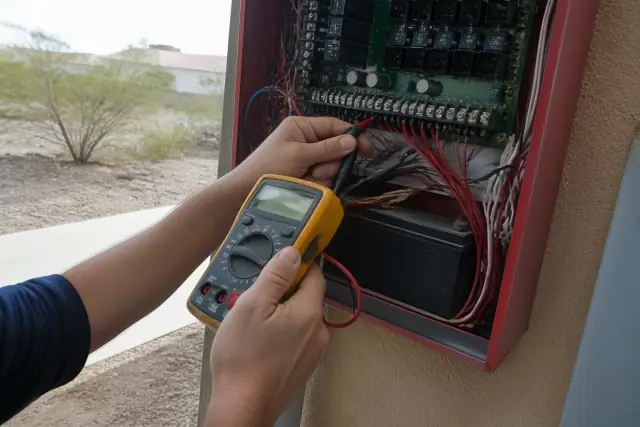
Technician using a multimeter to test a fire alarm system terminal block during maintenance in Peoria, AZ.

Preventive maintenance catches weak batteries, dirty detectors, and degraded devices before they become code violations. Industry data cited for fire-system maintenance indicates roughly a 400% return on dollars spent while cutting overall maintenance costs by 12-18%, and visits can be aligned with the required inspection cycle.

Fire Alarm System Design

Technician wiring a fire alarm control panel in a Peoria, AZ building.

System design accounts for ceiling height, construction type, occupancy classification, detector spacing, notification-appliance candela, and voltage drop across wire runs. Shop drawings are prepared for Peoria's Development and Community Services Department plan review.

Fire Alarm System Replacement & Upgrades

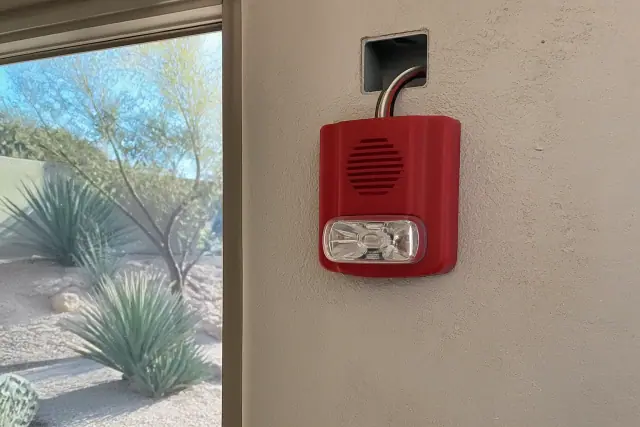
Wall-mounted fire alarm horn-strobe device being installed on a stucco exterior wall in Peoria, AZ.

Older conventional panels with discontinued parts can be replaced by UL 864-listed addressable equipment. Upgrade planning also reviews notification appliances for current strobe-candela and audibility requirements while accounting for existing wiring and future tenant changes.

Fire Alarm Panel Installation & Service

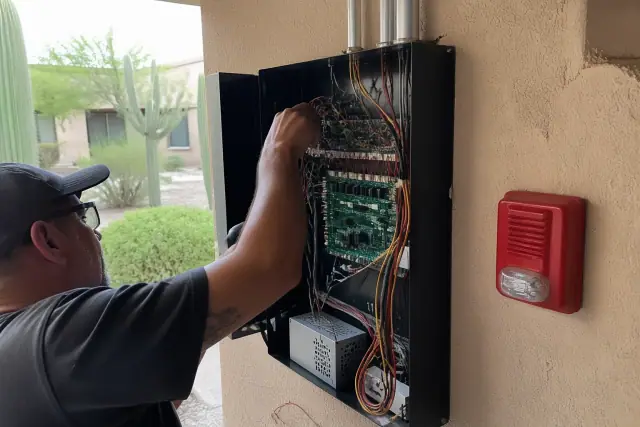
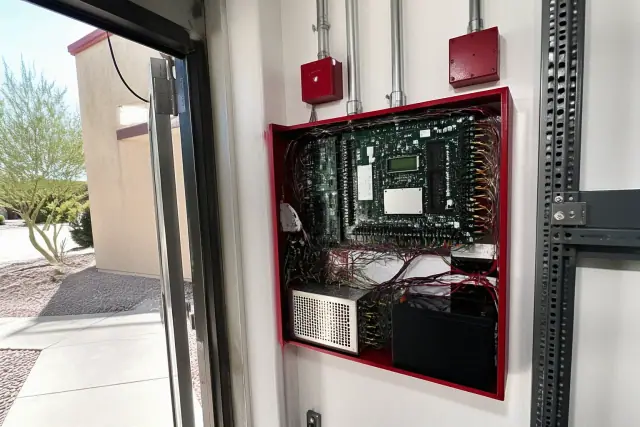
Open fire alarm control panel with neatly wired circuits and power supply at a retail property in Peoria, AZ.

Panel service includes zone programming, remote-annunciator setup, monitoring communication paths, and verification of every input and output against as-built drawings. Configuration is fully tested before a final inspection is requested.

Voice Evacuation & Mass Notification Systems

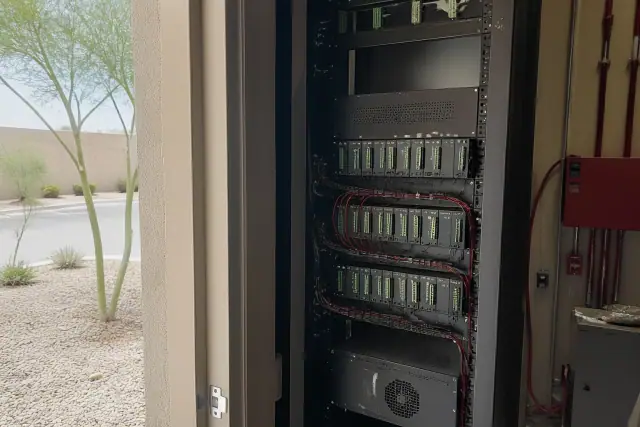
Voice evacuation and mass notification system rack in a commercial fire alarm room in Peoria, AZ.

Schools, larger occupancies, and multi-story or mixed-use buildings may need spoken instructions in addition to standard horns and strobes. Voice evacuation and mass notification systems can deliver pre-recorded or live instructions matched to the building's approved emergency plan.

Contractor Selection

How to Choose a Fire Alarm Contractor in Peoria

Compare licensing, bonding, insurance, training, permitting experience, design methods, documentation, monitoring compatibility, and ongoing support. A qualified contractor should explain what your occupancy requires, how the system will be tested, and what records you will receive after sign-off.

Licensing, Bonding & Insurance

Choose a contractor with the appropriate Arizona Registrar of Contractors license classification, proof of bonding, and insurance. Phoenix Fire Alarm Systems is licensed, bonded, and insured for Peoria fire alarm work, and those credentials can be verified before a project begins.

Peoria Permitting Experience

Local experience matters because Peoria plan review, alarm registration, inspection scheduling, and final sign-off involve specific city departments. Familiarity with Development and Community Services and Peoria Fire-Medical helps prevent avoidable drawing revisions and documentation gaps.

Occupancy-Specific System Design

Ask how the design changes for your ceiling height, occupant load, suite layout, and building use. Warehouses, retail spaces in the P83 Entertainment District, and offices along Bell Road or near Loop 101 need different detector, zoning, and notification approaches.

Complete Project Documentation

Confirm that shop drawings, test records, monitoring verification, device labels, and accurate as-built documents are part of the scope. These records support final inspection, insurance requests, future maintenance, and later tenant improvements.

Compatible Monitoring Paths

The monitoring design should fit the property's available network and backup needs rather than forcing one communication method. Confirm central-station compatibility and whether cellular, IP, or traditional phone-line paths are appropriate before the panel is configured.

Maintenance & Repair Support

Look beyond installation to testing schedules, detector cleaning, battery replacement, troubleshooting, and repair-call availability. Coordinated support keeps servicing and compliance records aligned instead of creating a last-minute scramble before inspection.

Peoria Fire Alarm Issues

Common Fire Alarm Problems in Peoria Properties

Peoria's desert dust, mixed building ages, active construction, and changing tenant layouts can expose weaknesses in detectors, wiring, batteries, panels, and documentation. Addressing warning signs early helps limit nuisance alarms, inspection failures, and periods when an occupied building cannot rely on its life-safety system.

Request System Inspection

Dust-Fouled Detectors

Dust accumulation can foul photoelectric detectors, alter sensitivity, and contribute to nuisance alarms. Inspection and cleaning plans should reflect Peoria's dry environment instead of waiting for a trouble condition or failed test.

Ground Faults & Dead Zones

Damaged conductors, loose connections, and addressable-loop faults can interrupt communication with field devices. Targeted troubleshooting traces the circuit, identifies the affected zone, and separates wiring problems from a failed detector or module.

Nuisance Alarms & Trouble Signals

False alarms and recurring trouble signals can come from dirty sensors, airflow, poor placement, failing devices, or panel configuration. Diagnosis should resolve the cause rather than repeatedly clearing the panel without correcting the underlying fault.

Weak Batteries & Degraded Devices

Panel batteries, smoke detectors, heat detectors, and notification appliances can degrade between inspections. Scheduled testing identifies low capacity or failed activation before the condition becomes a code violation or disrupts monitoring.

Legacy Panels & Discontinued Parts

Older Peoria buildings may still rely on conventional panels whose replacement parts are difficult to source or whose capabilities no longer fit current requirements. A replacement assessment compares the existing wiring and devices with an addressable upgrade path.

Poor Detector Placement

Detectors placed near HVAC vents, ceiling fans, doors, windows, kitchens, bathrooms, or dead-air spaces may respond late or trigger nuisance alarms. Correct placement follows ceiling geometry and real airflow patterns as well as the floor plan.

Why Choose Us

Why Choose Phoenix Fire Alarm Systems in Peoria?

Our team handles the connected work around a Peoria fire alarm system: site evaluation, design, permitting, installation, programming, testing, monitoring coordination, documentation, maintenance, and repair. Local inspection experience and attention to desert operating conditions help keep each recommendation tied to the actual property.

Local Inspection Knowledge

We coordinate with Peoria Fire-Medical through final walk-through and understand the importance of device labeling, correct activation, monitoring transmission, and as-built accuracy. That familiarity helps the facilities team prepare for sign-off without navigating the process alone.

Dust-Aware Detector Planning

Detector selection, placement, and maintenance planning account for Peoria's dust-heavy desert conditions. The goal is dependable sensitivity with fewer avoidable nuisance alarms, supported by cleaning and testing appropriate to the occupancy.

Design-to-Handoff Continuity

Keeping design, installation, panel programming, testing, and documentation connected reduces handoff gaps between separate vendors. We remain through system testing and walk the facilities team through panel operation, alarm reset, and basic troubleshooting.

Installation Process

Our Fire Alarm Installation Process in Peoria

The process moves from site assessment and system design through city review, installation, testing, and handoff. A small tenant improvement might take one to two weeks from permit to final sign-off, while a large commercial build can take several months as part of the overall construction schedule.

01.

Site Walk & Occupancy Review

We document ceiling heights, construction type, airflow conditions, existing equipment, and occupancy classification. This establishes the detector, notification, panel, and monitoring requirements that shape the project.

02.

System Design & Shop Drawings

The design sets device spacing, zoning, candela ratings, wiring routes, voltage-drop calculations, panel capacity, and communication paths. Shop drawings translate those decisions into the package submitted for review.

03.

Plan Review & Permitting

Drawings move through Peoria's Development and Community Services review, and required alarm registration is handled before a monitored system becomes active. Any city comments are addressed before installation advances to inspection milestones.

04.

Rough-In & Device Installation

Rough-in wiring is scheduled before walls and ceilings close, followed by detectors, notification appliances, modules, annunciators, and the control panel. Retrofit routes are planned around the existing structure and building operations.

05.

Programming & Full-System Testing

We program zones and input-output functions, then activate every device and notification appliance. Panel batteries, annunciation, supervisory functions, and monitoring transmissions are verified against the approved drawings.

06.

Final Inspection & Handoff

Peoria Fire-Medical verifies device activation and signal transmission during final inspection. After sign-off, we provide documentation and review panel operation, alarm reset, and basic troubleshooting with the facilities team.

Property Planning Examples

Fire Alarm Approaches for Peoria Properties & Businesses

Case Study 1: High-ceiling warehouses: Large facilities near Loop 303 may need beam or projected detectors instead of standard spot smoke detectors, with layouts based on ceiling height and airflow.

Case Study 2: Multi-tenant properties: Office buildings around Arrowhead can use separate zoning by suite so responders and facilities teams can identify the alarm location accurately as spaces change.

Case Study 3: Older-building retrofits: Commercial properties near Old Town Peoria and the 83rd Avenue corridor may require careful wiring routes and an upgrade from a legacy conventional panel to current addressable equipment.

Plan Your Project

Schedule a Peoria
Fire Alarm
Consultation

Tell us whether you are planning new construction, a retrofit, an inspection, a monitoring connection, a repair, or an upgrade. We will review the property, occupancy, existing system, and city requirements before outlining the next steps.

Fire Alarm Help

FAQs About Fire Alarm Systems in Peoria, AZ

These answers cover detector placement, building requirements, testing, monitoring, permitting, upgrades, maintenance, and contractor selection for Peoria properties. A site-specific review is still necessary because occupancy, ceiling conditions, square footage, and existing equipment change what a building needs.

Call Our Fire Alarm Team

Arizona follows the International Fire Code and NFPA 72 for detector placement and fire alarm design. Commercial requirements vary with square footage, occupancy classification, ceiling height, and building layout, and Peoria reviews the project before final approval. A building-specific design is necessary because airflow and ceiling geometry affect where smoke collects.

Smoke detectors should not be placed where HVAC supply or return air, ceiling fans, windows, or doors can pull smoke away from the sensor. Locations too close to kitchens or bathrooms can cause nuisance alarms from cooking exhaust or steam, while corners and peaked-ceiling dead-air spaces can delay detection. Placement should follow the applicable minimum clearances and the building's actual airflow.

Minimum requirements depend on occupancy classification, building height, square footage, ceiling conditions, and occupant load. Some occupancies require broader detection and notification coverage, monitoring, or voice evacuation, while smaller commercial spaces may have reduced requirements. Peoria's plan review determines the approved scope for the specific property.

Testing covers initiating devices, notification appliances, panel batteries, annunciation, supervisory functions, and monitoring connections. The resulting records document device operation and signal transmission for city, insurance, and future maintenance needs.

A building may use cellular, IP, or a traditional phone-line communication path depending on its infrastructure and backup requirements. The panel and communication method must be compatible with the central station and configured so alarm, trouble, and supervisory signals transmit correctly.

Peoria requires permitting and alarm registration before a monitored system becomes active. Registration is available through the city's online process or by calling 888-509-9159. We coordinate the drawings, review steps, inspection scheduling, and documentation associated with the project.

An addressable panel identifies the programmed device or zone that reports an alarm or trouble condition, giving responders and facilities teams a more precise location. A conventional panel groups devices into broader circuits, and older models may have discontinued parts or limited expansion options. The existing wiring and future property needs help determine whether an upgrade is practical.

Desert dust can accumulate in photoelectric detectors, change sensor sensitivity, and contribute to nuisance alarms or failed tests. Detector selection, placement, cleaning, and maintenance frequency should account for the property's exposure rather than relying on a generic schedule.

Replacement becomes worth evaluating when a conventional panel is outdated, parts support has ended, faults recur, or the system cannot support current zoning, monitoring, or notification needs. An assessment should compare the existing devices and wiring with the proposed addressable equipment before setting the scope.

Larger occupancies, schools, multi-story buildings, and some mixed-use properties may need spoken instructions rather than relying only on horns and strobes. The approved design determines whether the system uses pre-recorded messages, live voice, or both based on building use and emergency planning.

A maintenance plan can coordinate required testing, battery replacement, detector cleaning, repair findings, and documentation. The schedule should reflect occupancy type and local dust exposure so small problems are found during planned visits instead of during an inspection or shutdown.

Peoria Fire-Medical verifies that devices activate correctly, notification appliances operate, and monitoring signals reach the intended destination. Device labels and approved drawings must match the installed system. After sign-off, the facilities team receives documentation and an operating walkthrough.

Offices, retail centers, warehouses, multi-tenant buildings, schools, mid-rise properties, and mixed-use developments each present different detector, zoning, and notification needs. High ceilings may call for beam or projected detection, while multi-tenant layouts often benefit from suite-specific zoning.

We work throughout North Peoria, South Peoria, Old Town Peoria, Vistancia, and commercial areas around Arrowhead and Peoria Sports Complex. Service also extends to Glendale, Surprise, Sun City, and El Mirage as described in our Peoria service coverage.

Ask for the appropriate contractor license, proof of bonding and insurance, technician training, and a clear explanation of permitting, design, testing, monitoring, and repair support. Confirm that the scope includes shop drawings, test records, monitoring verification, and accurate as-built documentation for future inspections and maintenance.