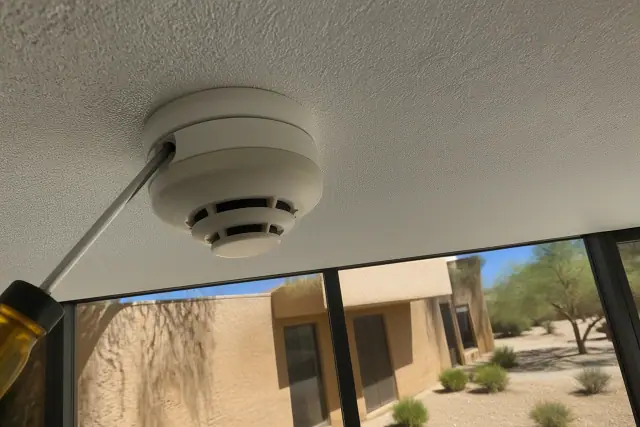
We install and replace smoke and heat detectors as part of code-aware fire alarm protection for homes and businesses.
Explore Service
Phoenix Fire Alarm Systems is a locally owned, family owned fire alarm contractor serving Phoenix and the Salt River Valley. We install fire alarm systems, commercial fire alarm systems, and fire alarm panels for new and existing properties. Our technicians also provide fire alarm inspection and testing, 24/7 monitoring, repair and troubleshooting, and preventive maintenance. System design, replacements and upgrades, voice evacuation, and mass notification are handled under one roof.
Phoenix covers 517.9 square miles, while summer attic temperatures regularly exceed 140 degrees and monsoon dust reaches panels and detector chambers. Those conditions can accelerate equipment drift, communication failures, and nuisance alarms. NICET-certified technicians work under an active Arizona Registrar of Contractors license and commission systems against NFPA 72 and Phoenix Fire Department requirements. Insurance, bonding, and manufacturer training support both commercial projects and residential work.
From Arcadia and Ahwatukee homes to Camelback Corridor offices and I-10 distribution centers, we match the system to the property, occupancy, and local approval path. Request an estimate to discuss installation, monitoring, inspection, or a specific trouble condition.
Phoenix Fire Alarm Credentials
Choose coordinated fire alarm installation, commercial systems, inspection and testing, monitoring, repairs, maintenance, design, upgrades, panel service, and voice evacuation or mass notification from one Phoenix contractor.
We install and replace smoke and heat detectors as part of code-aware fire alarm protection for homes and businesses.
Explore Service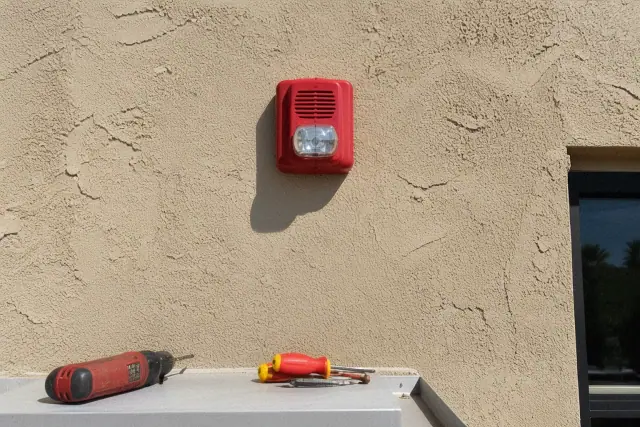
Addressable commercial systems identify the exact device in alarm for office parks, distribution centers, hotels, industrial sites, and multi-building campuses. Panels and devices are sized to the property's square footage and occupancy classification. Explore Service
Explore Service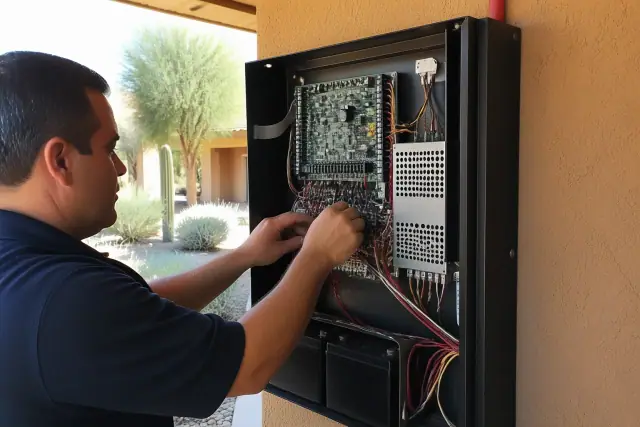
Annual inspections cover panels, detectors, pull stations, notification appliances, battery backups, and monitoring transmission under NFPA 72 Chapter 14. You receive a written device report for the AHJ and insurance carrier. Explore Service
Explore Service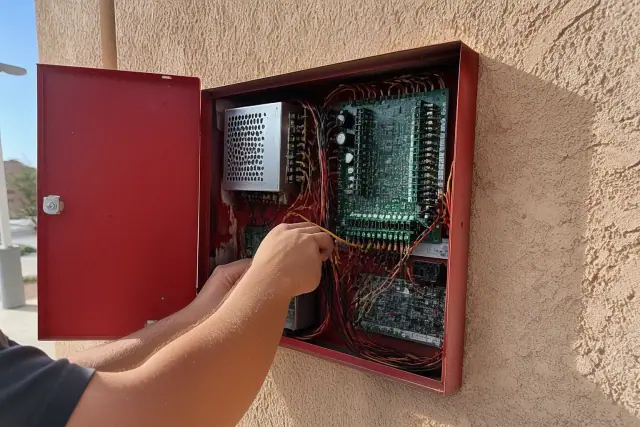
Digital and cellular backup paths keep alarm, trouble, and supervisory signals connected when a phone line is cut or a storm interrupts service. Monitoring protocol notifies the appropriate fire authority first, then follows the building's contact list.
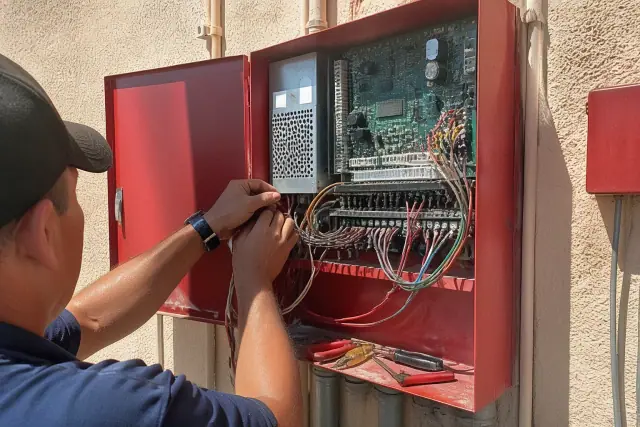
We trace ground faults, chirping panels, phantom alarms, chafed wiring, and failing power supplies to the source instead of replacing parts by guesswork. Diagnostic work uses meggers, current clamps, and panel software, with common boards, detectors, and batteries stocked for repair.
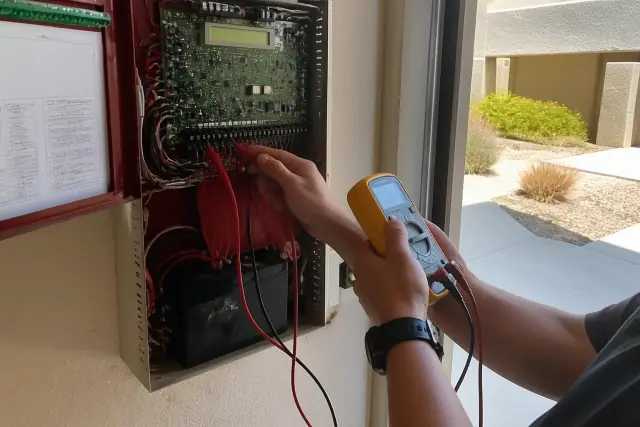
Preventive maintenance helps extend equipment life and reduce false alarms. Visits include cleaning detector heads where Phoenix dust enters HVAC returns and detector chambers, plus attention to batteries, panel conditions, and developing trouble signals.
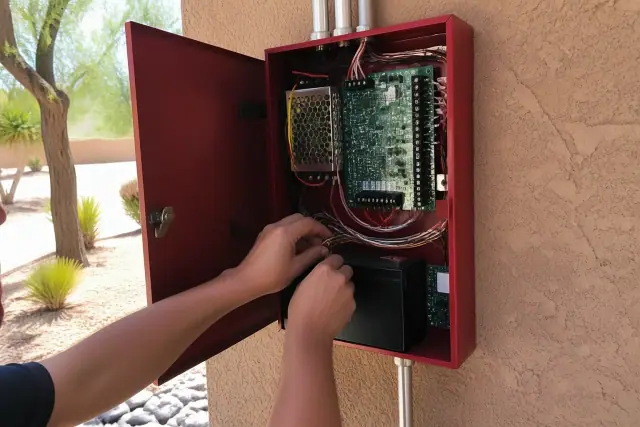
Shop drawings document device placement, candela ratings, and circuit routing before installation begins. This design work supports AHJ plan review and reduces change orders or failed inspections caused by designing on the fly.
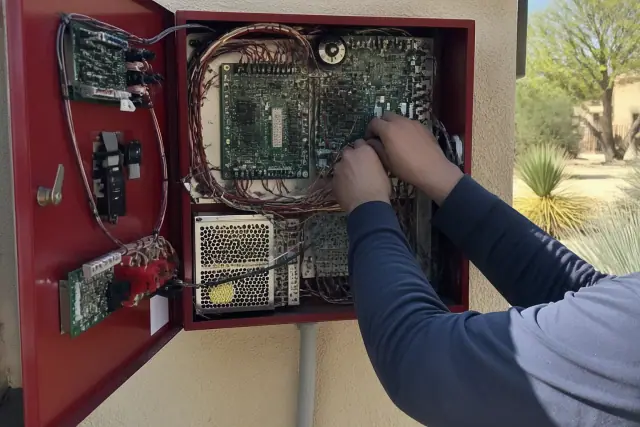
Commercial systems typically last 10 to 15 years before parts availability and code changes can make an upgrade the practical choice. We can reuse viable wiring and devices where appropriate, then complete the panel swap, device replacement, and recommissioning within a single scheduled shutdown window.
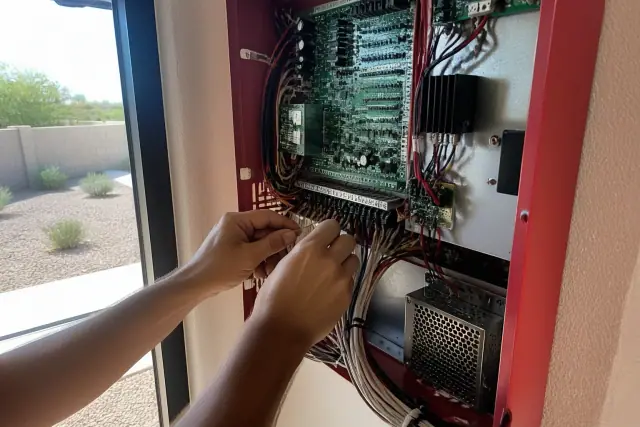
We install UL 864-listed control panels programmed for the building's device layout. Options range from conventional panels for small retail spaces to networked addressable panels for multi-building properties, with panel-level service for boards, batteries, and power supplies.
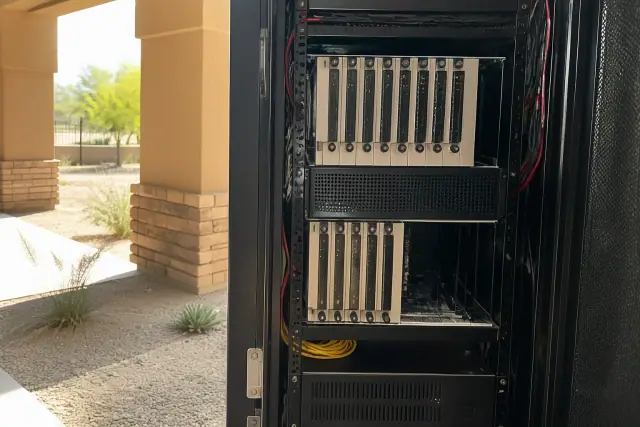
Voice evacuation systems provide intelligible prerecorded and live-page instructions through zoned speaker circuits for larger occupancies, hotels, and multi-story buildings. Mass notification can integrate weather, lockdown, and other emergency messaging without conflicting with standard fire evacuation signals.
Technical planning connects the right detection architecture, monitoring path, environmental safeguards, and approval documentation to the way each Phoenix property is used.
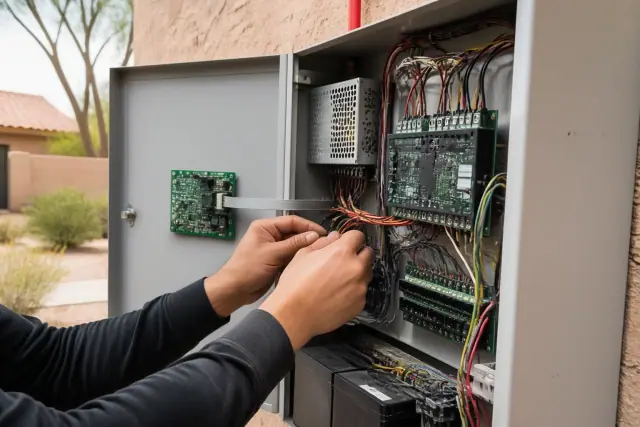
The system architecture should fit the occupancy and device layout, whether a smaller property needs conventional zoning or a complex site benefits from exact device-level information.
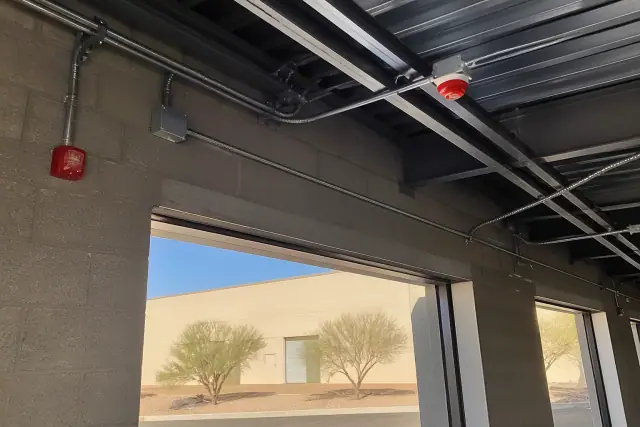
Warehouses and manufacturing sites near the Sky Harbor freight corridor and South Phoenix industrial zones need detection selected for dust, heat, and high ceilings.
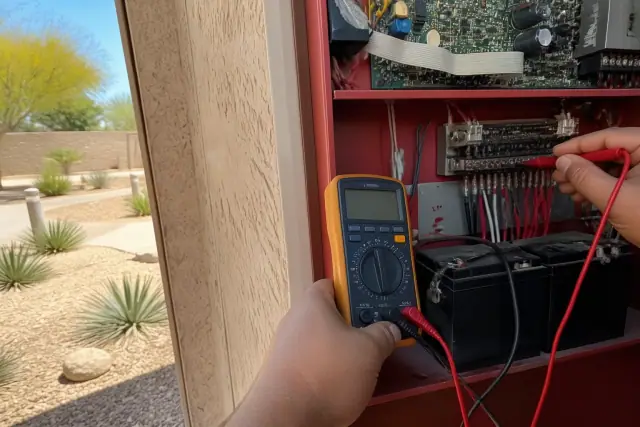
Continuous monitoring pairs signal response with remote health checks that can identify developing electrical or communication issues before they become a missed inspection or false dispatch.
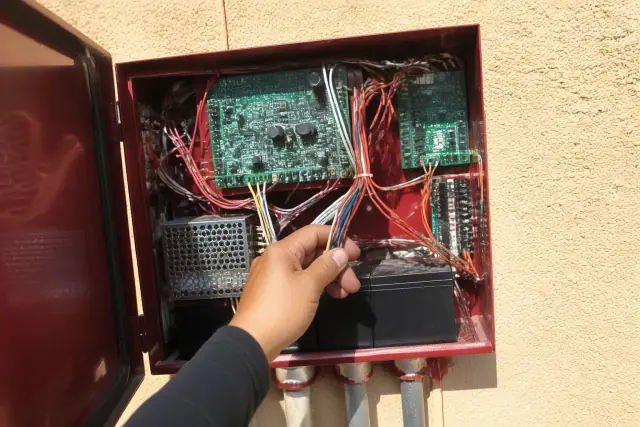
Planning and documentation follow the project from drawings through City of Phoenix review, functional testing, and final inspection sign-off.
Local ownership is backed by technician credentials, commercial project protections, manufacturer training, and experience navigating Phoenix approvals and desert operating conditions.
Field technicians carry NICET fire alarm certification and work under an active Arizona Registrar of Contractors license specific to fire alarm work. Those credentials support permit applications, plan reviews, inspections, and AHJ acceptance.
General liability and workers' compensation coverage are sized for commercial-scale projects, and certificates of insurance are available before work begins. Bonding and ongoing manufacturer training add the documentation property managers and underwriters expect.
Crews have worked with addressable systems in new mid-rise construction and conventional systems in older buildings. That range helps account for local code requirements, heat, dust, power fluctuations, and the realities of both commercial and residential properties.
Heat, dust, aging components, wiring damage, and failed communication paths can turn a working fire alarm into a source of trouble signals, nuisance alarms, or missed reporting. A focused assessment identifies the affected device or circuit and the appropriate repair or upgrade path.
Request System AssessmentA chafed conductor, failed component, or power-supply issue can produce trouble signals that appear and disappear. Meggers, current clamps, and panel diagnostic software help isolate the fault instead of relying on part swapping.
Fine desert and monsoon dust can move through HVAC returns and settle inside detector chambers. Cleaning detector heads during maintenance helps reduce nuisance alarms and equipment drift.
Extreme attic heat and summer power fluctuations can stress cable, batteries, and panel components. Proper cable and conduit ratings plus battery backup help keep detection dependable in Phoenix conditions.
A discontinued panel can become difficult to repair even when the surrounding wiring remains usable. A planned modernization can retain viable circuits or devices while replacing unsupported controls and recommissioning the system.
Only about 3% of smoke detectors fail within the first year, but by year 15 the odds of failure are better than 50/50. Sensitivity testing identifies units outside listed tolerances before nuisance alarms or missed detection force a larger problem.
A cut phone line, storm outage, ground fault, or communication failure can prevent a signal from reaching the central station. Backup paths and remote health checks expose those gaps before an emergency.
A coordinated process connects property conditions and occupancy requirements to system design, permit review, installation, testing, and acceptance documentation.
We review the building layout, square footage, occupancy classification, existing equipment, detection risks, and any connected suppression systems before recommending an approach.
Panel capacity, device placement, candela ratings, circuit routing, and communication paths are documented for the property and its approval requirements.
Permit documents move through City of Phoenix Development Services, plan review, and the relevant fire authority so required changes are addressed before field work.
Technicians install and terminate circuits, panels, detectors, pull stations, speakers, horns, strobes, and communication equipment, then program the system to match the device layout.
Each initiating device is functionally tested, notification audibility and visibility are verified, and the monitoring signal is confirmed at the central station. Results are recorded for review.
We support final inspection sign-off, provide system documentation, and identify a direct repair path for any failed device. Monitoring contacts, access information, and ongoing maintenance needs can then be kept current.
Service covers Phoenix properties, named neighborhoods, and commercial corridors across the Salt River Valley and Maricopa County. Project scope and jurisdictional requirements are confirmed for each installation, inspection, repair, or monitoring connection.
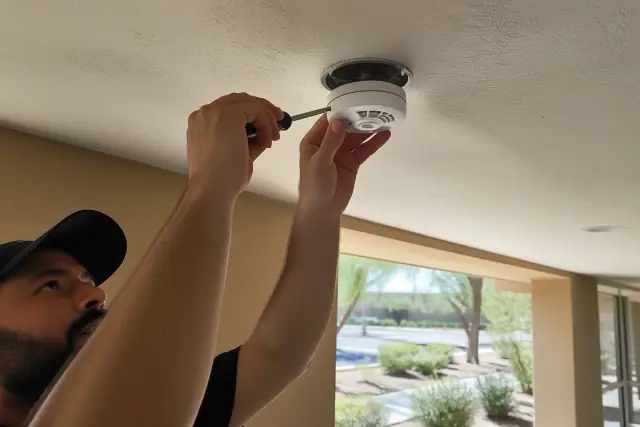
Tell us about the property, existing equipment, and whether you need installation, monitoring, inspection, repair, maintenance, design, or an upgrade. We can review the next steps for assessment, permitting, testing, and scheduling.
These answers cover common questions about fire alarm installation, inspection, monitoring, troubleshooting, and code coordination in Phoenix. A property-specific review is still important because the system must match the building layout and occupancy.
Call Fire Alarm ExpertsServices include system installation, commercial fire alarms, inspection and testing, monitoring, repair and troubleshooting, maintenance, design, replacement and upgrades, panel installation and service, and voice evacuation or mass notification. Residential hardwired systems with battery backup are also available.
A conventional system reports a general alarm zone, while an addressable system identifies the exact initiating device. Conventional panels can fit smaller retail properties, while networked addressable panels support larger or multi-building sites.
A fire alarm system should receive an annual inspection because annual inspection is a code requirement. Panels, detectors, pull stations, notification appliances, battery backups, and signal transmission are checked against the applicable NFPA 72 testing frequencies.
Technicians functionally test initiating devices, verify notification appliance audibility and visibility, check detector sensitivity where applicable, and confirm the monitoring signal reaches the central station. A written device report documents the results for the AHJ and insurance carrier.
Digital and cellular backup communication paths can keep the monitoring connection active if a phone line is cut or a storm interrupts one path. Alarm, trouble, and supervisory signals are received around the clock, with the fire authority notified before the designated contact list.
Yes. Diagnostic work traces trouble signals to issues such as chafed wiring, a failing power supply, a damaged component, or another circuit fault using meggers, current clamps, and panel software.
An upgrade can make sense when the panel manufacturer has discontinued support, replacement parts are difficult to obtain, code changes affect the existing design, or testing reveals aging equipment. Viable wiring and devices may be reused where appropriate to control the scope.
Panel options include UL 864-listed conventional controls for smaller properties and networked addressable panels for larger or multi-building sites. Each panel is programmed around the actual device layout and occupancy rather than treated as a one-size-fits-all component.
Yes. Shop drawings show device placement, candela ratings, and circuit routing for AHJ review, and permit submissions move through City of Phoenix Development Services. The process continues through plan review and final inspection sign-off.
High attic temperatures can stress wiring, batteries, and panel components, while fine desert and monsoon dust can collect inside detector chambers. Correct cable ratings, battery backup, detector cleaning, and sensitivity testing help address those conditions.
Yes. Residential work can include hardwired detection with battery backup for sleeping areas, common spaces, and attached garages. The design is based on the home's layout and detection coverage needs.
Voice evacuation provides intelligible prerecorded or live-page instructions through zoned speaker circuits during a fire event. Mass notification can add weather, lockdown, or other emergency messaging while coordinating with standard fire evacuation signaling.
Heat detectors or beam smoke detectors may be specified where standard spot detection would false-alarm or where ceiling height changes the detection approach. The system can also coordinate signaling and shutdown sequences with installed fire suppression equipment.
Service covers Phoenix, the Salt River Valley, and Maricopa County, including Arcadia, Ahwatukee, North Phoenix, the Camelback Corridor, the I-10 corridor, the Sky Harbor freight corridor, and South Phoenix industrial zones. Jurisdictional requirements are confirmed for each property.