Proudly serving Phoenix, Mesa, Glendale, Scottsdale, Tempe, Chandler & surrounding areasCall or Text 24/7: 602-449-8143
Aerial view of residential neighborhoods, desert washes, and low-rise buildings in Phoenix, AZ.

Fire Alarm System Replacement & Upgrades: Modernize Aging Panels & Systems in Phoenix, AZ

Phoenix Fire Alarm Systems replaces and upgrades aging fire alarm systems for Phoenix property owners. Our work includes control panel replacement, targeted component upgrades, addressable and intelligent system conversions, voice evacuation, and mass notification integration. We serve offices, warehouses, schools, hospitals, high-rises, and multi-building campuses with plans shaped around each facility.

Phoenix rooftop equipment, attic spaces, and mechanical rooms can exceed 120 degrees in summer, adding stress to wiring insulation, sensor electronics, and control panel components. Older systems may also face scarce parts, recurring false alarms, inspection failures, or zone-only identification that slows troubleshooting. Our technicians evaluate the existing panel, devices, wiring, battery backup, and records before recommending a focused upgrade or complete replacement.

NICET-certified technicians work to NFPA 72 requirements and coordinate City of Phoenix permitting and applicable fire-prevention review before installation begins.

Phoenix Fire Alarm Systems provides fire alarm system replacement and upgrades in Phoenix, Scottsdale, Tempe, Mesa, Chandler, and Glendale.

★ ★ ★ ★ ★4.9/5 Average Rating · 20+ Years of Experience · Thousands of Customers Helped · Licensed & Insured · Residential & Commercial

Fire Alarm Replacement Options & Benefits

What Does Fire Alarm Replacement Involve?

A replacement starts with a walkthrough that documents every initiating device, the control panel, wiring type, battery backup, and the most recent inspection report. That evaluation shows whether a new panel can work with existing code-compliant wiring and devices or whether aging infrastructure makes a full system replacement the better path.

The selected design accounts for floor plan, ceiling height, HVAC airflow, occupancy classification, device count, and connections to elevators, door holders, dampers, and access control. We size panels with room for future tenant improvements and select detection appropriate to kitchens, mechanical rooms, medical offices, or dusty warehouse floors.

After permits and plan review, supervised circuits and devices are installed to the approved design. Every device and zone is functionally tested, the panel is programmed, and the finished project is documented with as-built drawings, a device inventory, and test results.

Benefits of a Modern Fire Alarm System

Replacing an obsolete system can improve device identification, building-system coordination, recordkeeping, and serviceability while addressing the conditions behind failed inspections or unreliable operation.

  • Exact device identification on addressable loops
  • Timestamped event history for maintenance records
  • Remote diagnostics for faster troubleshooting
  • Direct elevator, door-holder, HVAC, and access-control integration
  • Reduced nuisance dispatches from aging detectors
  • Supervised cellular or IP signal pathways
  • Voice instructions for clearer occupant evacuation
  • Documented testing and audit-ready system records
Replacement & Upgrade Services

Fire Alarm Replacement & Upgrade Services

The right scope may be a control panel change, selective device and component upgrades, or a complete rewire with modern notification and communication features. We compare the condition of the installed system with the needs of the building so owners can review practical options instead of receiving a generic recommendation.

Fire Alarm Panel Replacement

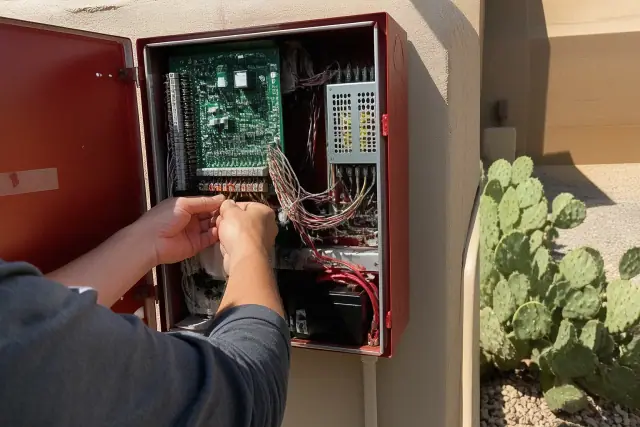
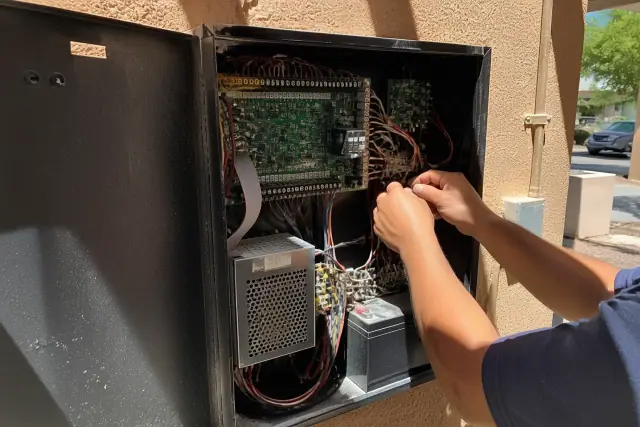
Technician wiring a fire alarm control panel cabinet with visible circuits during an upgrade in Phoenix, AZ.

When a control panel line is obsolete or no longer supportable, we replace the panel, program the new system, and verify compatibility with the installed circuits and devices. Modern addressable panels can support hundreds of individually identified devices per loop while preserving timestamped event history for service and inspection records.

Request Estimate

Targeted Component Upgrades

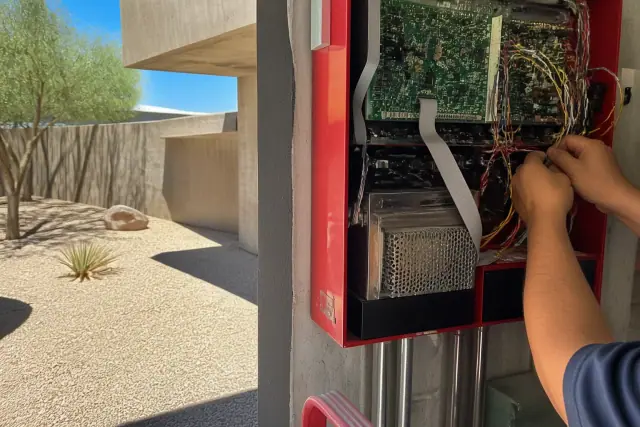
Technician wiring a fire alarm control panel during an upgrade at a jobsite in Phoenix, AZ.

A full rewire is not always necessary. If existing conduit, cabling, and compatible devices remain in good condition and meet current supervision requirements, a targeted panel or device upgrade can reduce disruption while addressing the parts that are obsolete or unreliable.

Request Estimate

Voice Evacuation Upgrades

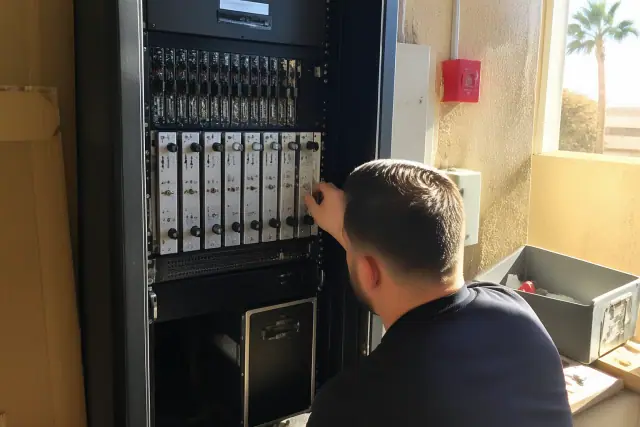
Technician inspecting a voice evacuation amplifier rack at a fire alarm system worksite in Phoenix, AZ.

Emergency voice evacuation systems replace or supplement horn-strobe notification with spoken instructions. They are suited to facilities where occupancy, height, or building use calls for clearer direction, including schools, hospitals, and high-rises.

Request Estimate

Mass Notification Integration

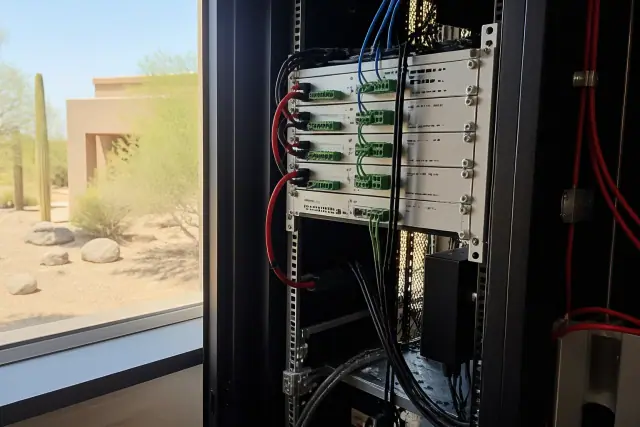
Technician inspecting mass notification amplifier cards in a server rack at a building in Phoenix, AZ.

Larger commercial and industrial sites can integrate weather alerts, lockdown instructions, and other critical communications with standard fire evacuation messaging. This gives facility managers one emergency communication platform instead of separate, disconnected systems.

Request Estimate

Custom System Design

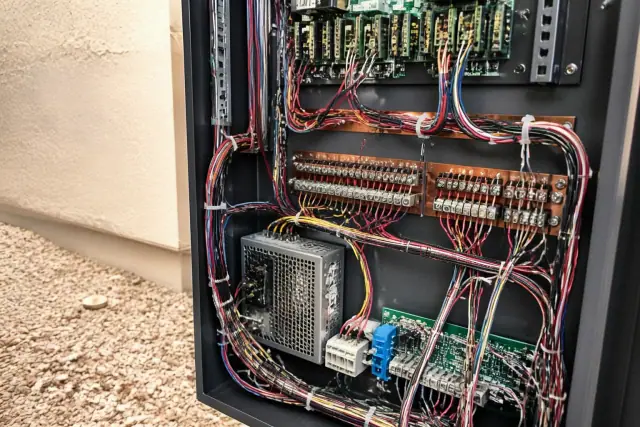
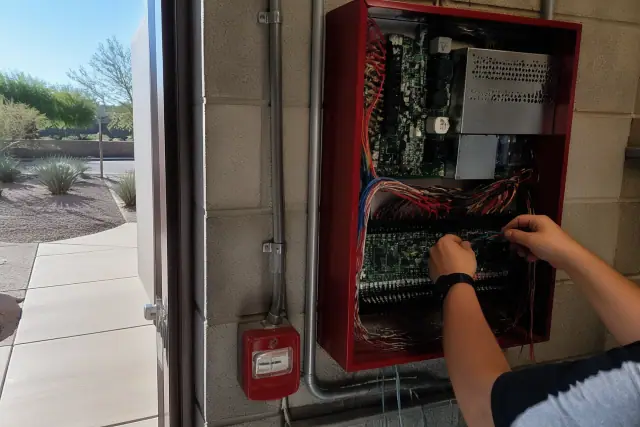
Open fire alarm control panel with organized wiring and industrial components at a jobsite in Phoenix, AZ.

System design accounts for actual floor plans, ceiling heights, airflow, hazards, and occupancy rather than applying a standard layout. A warehouse with 30-foot ceilings, for example, needs a different detection approach than medical offices, kitchens, or mechanical rooms.

Request Estimate

Monitoring and Testing Integration

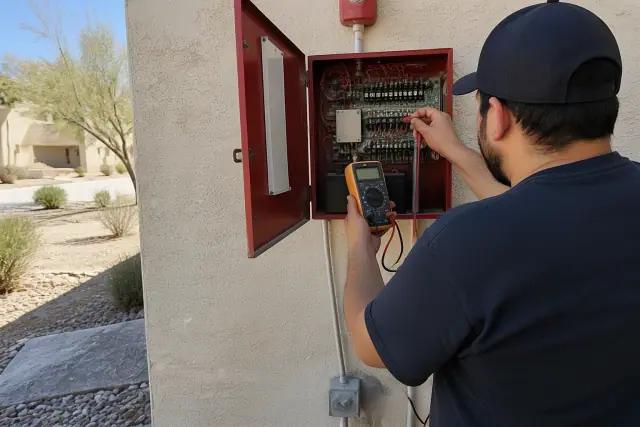
Technician using a multimeter to test a fire alarm system at a sun-bleached building in Phoenix, AZ.

Replacement planning can include 24/7 monitoring over supervised cellular or IP pathways and the testing records needed to verify signal transmission. Around-the-clock monitoring gives an alarm at 2 a.m. the same defined response pathway as an alarm at 2 p.m.

Request Estimate
Fire Alarm System Options

Types of Fire Alarm Systems

The five main configurations are conventional, addressable, intelligent, wireless, and hybrid fire alarm systems. The appropriate option depends on how precisely devices must be identified, the feasibility of new conduit, the building or campus layout, required integrations, and the condition of existing infrastructure.

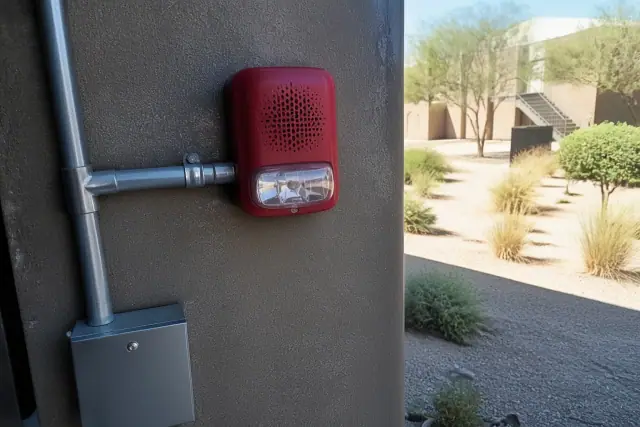
Fire alarm horn-strobe device mounted on a wall with conduit in Phoenix, AZ.

Conventional Fire Alarm Systems

Conventional systems group devices into wired zones. They can remain serviceable when parts and wiring are sound, but an alarm identifies the affected circuit rather than the exact initiating device.

  • Devices organized by zone
  • Circuit-level alarm identification
  • Existing systems may remain serviceable
  • Part availability affects upgrade decisions
  • Wiring condition must be evaluated
Request Estimate
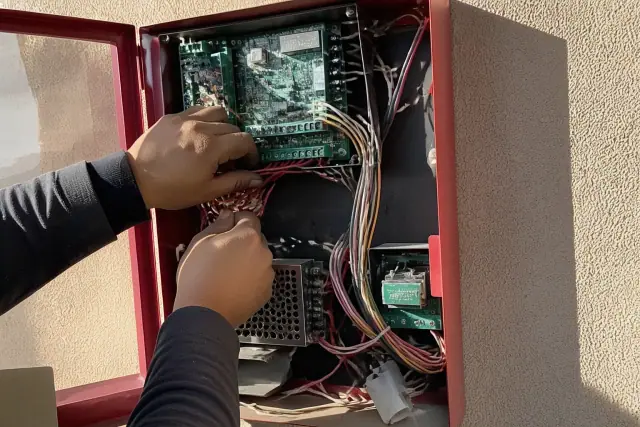
Technician wiring a fire alarm control panel on a stucco wall at a job site in Phoenix, AZ.

Addressable Fire Alarm Systems

Addressable systems identify each connected device individually, helping responders and technicians locate the source of an alarm without searching an entire zone. Current panels also provide event logs and remote diagnostic information.

  • Individual device addresses
  • Faster alarm-source location
  • Timestamped event logging
  • Remote diagnostic support
  • Growth capacity for future devices
Request Estimate
Technician hands wiring a fire alarm control panel in a building in Phoenix, AZ.

Intelligent Fire Alarm Systems

Intelligent systems add onboard analysis to individually identified devices. That additional data can help distinguish changing detector conditions from actual alarm events and can support more informed maintenance decisions.

  • Individually identified devices
  • Onboard signal analysis
  • Detector-condition information
  • Reduced false-alarm potential
  • More targeted maintenance
Request Estimate
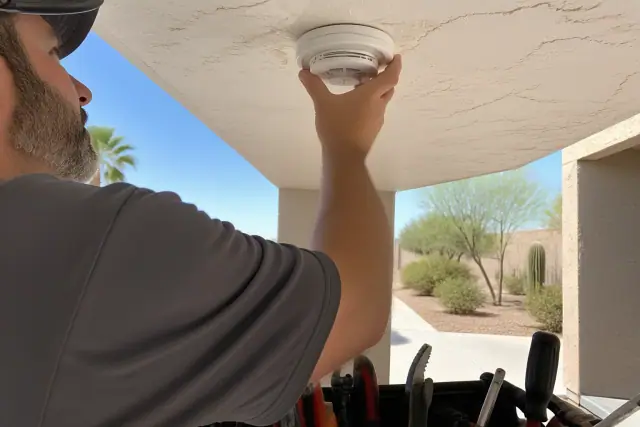
Technician installing a smoke detector on a commercial ceiling in Phoenix, AZ.

Wireless Fire Alarm Systems

Wireless systems use radio communication between devices and the control panel. They can be useful where running new conduit is impractical, including historic structures in downtown Phoenix, but still require a design suited to the building.

  • Radio communication between devices and panel
  • Less new conduit where appropriate
  • Option for difficult installation paths
  • Suited to some historic structures
  • Building-specific planning still required
Request Estimate
Technician wiring a fire alarm control panel in a building in Phoenix, AZ.

Hybrid Fire Alarm Systems

Hybrid systems combine wired and wireless devices on one panel. This can provide a practical upgrade path when part of a building supports new wiring while another area would be difficult or disruptive to reach with conduit.

  • Wired and wireless devices together
  • One coordinated control panel
  • Flexible upgrade sequencing
  • Reduced disruption in difficult areas
  • Compatibility reviewed during design
Request Estimate
Finding Your Right Fit

Choosing the Right Replacement Approach

The decision depends on panel support, wire integrity, device condition, building size, required integrations, occupancy, and whether multiple structures need networked panels. We document those factors and compare targeted upgrades with complete replacement so the selected scope fits the actual facility.

NICET-Certified Technicians

Our technicians hold NICET fire alarm certification and complete replacement work to NFPA 72 requirements for detector spacing, notification appliance placement, system supervision, and panel programming.

Phoenix Permit Coordination

Projects go through permit submittal with the City of Phoenix Development Services Department and, when applicable, coordination with the Phoenix Fire Department fire prevention bureau before wiring begins.

Building-Specific Design

Panel capacity, detector type, notification, network architecture, and integrations are selected for the facility rather than treated as a one-for-one generic swap. The design also leaves practical growth headroom so a tenant improvement does not force another full change in five years.

What Sets Us Apart

Why Choose Us for Fire Alarm Replacement?

Phoenix Fire Alarm Systems combines system assessment, code-focused design, permitting coordination, installation, commissioning, and documentation in one replacement plan. Experience with office, warehouse, school, hospital, high-rise, and campus systems helps us account for different occupancy needs and minimize avoidable downtime.

Request System Assessment

Aging Control Panels

Most fire alarm control panels have a functional service life of 15 to 25 years. Buildings with systems that are twenty, thirty, or more years old may be relying on electronics and wiring insulation that were not designed for current occupancy or code needs.

Discontinued Replacement Parts

Manufacturers commonly stop supporting boards and modules 10 to 15 years after production ends. If a panel predates 2008 or comes from a discontinued line, scarce proprietary parts can turn each repair into a temporary measure and increase the risk of a future outage.

Repeated False Alarms

Recurring nuisance alarms can indicate degraded smoke detectors, corroded wiring, or a control board losing calibration. Ionization detectors may drift out of tolerance with age, while dust infiltration in Phoenix can accelerate detector problems.

Failed Inspections

Dead batteries, unsupervised circuits, and missing documentation can lead to a red-tagged system. A failed commercial inspection may bring a 30-day compliance window before penalties or occupancy restrictions apply, making a clear corrective scope important.

Heat and Dust Stress

Sustained Phoenix heat affects rooftop equipment, attic runs, mechanical rooms, wiring insulation, sensors, and panel electronics. Dry, dusty conditions also infiltrate detection equipment, which can worsen calibration drift and false alarms in older systems.

Limited Zone Identification

A conventional panel identifies the circuit where an alarm occurred but not the exact device. Upgrading to addressable or intelligent technology can narrow the search area immediately, helping responders and service technicians locate the initiating device faster.

How It Works

Our Fire Alarm Replacement Process

Each project moves from an installed-system assessment to a defined scope, permit coordination, installation, commissioning, and final documentation. The sequence keeps design decisions tied to existing conditions and provides the records needed for final review and ongoing maintenance.

01.

Assess the Existing System

We walk the facility and document initiating devices, notification appliances, panel condition, wire type, battery backup, integrations, and the latest inspection findings.

02.

Define the Replacement Scope

Wire integrity, device compatibility, occupancy, system capacity, and required integrations guide the choice between targeted upgrades and full replacement. The resulting design is sized for the building and practical future growth.

03.

Coordinate Plans and Permits

Plans are submitted to the City of Phoenix and, for applicable projects, reviewed with the fire prevention bureau before equipment is installed or new wiring is pulled.

04.

Install Equipment and Wiring

Technicians install supervised circuits, panels, initiating devices, and notification appliances to the approved plan, with labeled terminations that make later service more efficient.

05.

Test and Commission the System

Every device is functionally tested, every zone or address is verified, and the panel is programmed and checked against the approved plan set before the project is called complete.

06.

Deliver Final Documentation

We provide as-built drawings, a device inventory, and test results for final inspection, maintenance planning, insurer requests, and future system service.

Plan Your Upgrade

Schedule a Fire Alarm
Replacement
Consultation

Request a facility walkthrough and written estimate for a panel replacement, targeted system upgrade, or complete fire alarm replacement. We will document the existing conditions and explain the scope factors affecting your project.

Replacement Guidance

Fire Alarm Replacement FAQs

These answers cover common questions about replacement cost, system life, upgrade paths, technology options, monitoring, and testing for Phoenix commercial properties.

Call Our Technicians

A panel replacement in a small commercial space may cost a few thousand dollars for the panel and programming alone. A full commercial replacement generally falls between $2 and $8 per square foot depending on complexity, panel brand, device count, and how much existing wiring can be reused. A written estimate after a walkthrough is more useful than a generic average.

Equipment for smaller properties generally ranges from $1,000 to $5,000, with individual initiating devices such as smoke detectors and pull stations costing $20 to $200 each. Basic commercial notification often runs $0.50 to $1.00 per square foot, while addressable devices, voice evacuation, and networked panels increase the scope. A new control panel in an existing commercial building commonly runs around $10,000 depending on jurisdiction and infrastructure.

NFPA 72 does not set one fixed replacement date, but control panels typically reach functional end-of-life in 15 to 25 years. Planning often begins after the 20-year mark or sooner when the product line is discontinued. Smoke detectors are commonly replaced on a 10 to 15 year cycle even when the panel is newer.

The five main types are conventional, addressable, intelligent, wireless, and hybrid fire alarm systems. Conventional systems identify a zone, addressable systems identify individual devices, intelligent systems add onboard analysis, wireless systems communicate by radio, and hybrid systems combine wired and wireless devices.

A residential hardwired detector swap may be handled by a licensed electrician or qualified technician. A commercial detector connected to a monitored, permitted fire alarm system should be replaced by a certified fire alarm technician because it is part of a supervised circuit. The circuit must be tested and re-verified after the device is replaced.

Often, yes. Existing conduit and cabling may be reused when wire integrity is sound, supervision requirements are met, and compatible upgrade paths remain available. Degraded, undocumented, or noncompliant wiring can make complete replacement the more reliable long-term option.

Common indicators include a panel near end of life, discontinued boards or modules, recurring false alarms, corroded wiring, failed inspections, dead batteries, and missing documentation. Zone-only identification or an inability to support current occupancy and integration needs can also justify an upgrade assessment.

Panel selection depends on building size, device count, required integrations, voice evacuation needs, and whether multiple buildings need a networked system. The design should also include reasonable capacity for future changes so a tenant improvement does not trigger another premature replacement.

Existing wiring may be reused when testing confirms sound integrity and the circuits meet current supervision and compatibility requirements. The assessment reviews wiring type, documentation, terminations, and the supported upgrade path before reuse is included in the scope.

Voice evacuation is considered when building occupancy, height, or use calls for spoken instructions instead of horn-strobe notification alone, including many schools, hospitals, and high-rises. Larger commercial and industrial sites may add mass notification for weather alerts, lockdown instructions, and other critical communications on the same platform.

Modern panels can coordinate with elevator controllers, magnetic door holders, HVAC dampers, and access-control platforms. Those connections support functions such as elevator recall and automatic smoke control, and they must be accounted for in the system design and commissioning plan.

A monitored panel sends alarm, supervisory, and trouble signals to a monitoring center over a supervised cellular or IP pathway. The monitoring center follows a defined call-down sequence, contacts designated building personnel, and dispatches the fire department when the signal is not cleared within the required window. The communication path is also documented and tested on its required schedule.

NFPA 72 testing intervals vary by component. Initiating devices and notification appliances generally receive annual testing, monitoring and supervisory signals are checked more frequently, and battery backup systems have semiannual and annual load-test requirements. Reports should record the date, technician, device-by-device results, and any deficiencies.