Proudly serving Phoenix, Mesa, Glendale, Scottsdale, Tempe, Chandler & surrounding areasCall or Text 24/7: 602-449-8143
Aerial view of residential neighborhoods, desert washes, and low-rise buildings in Phoenix, AZ.

Fire Alarm Panel Installation & Service: New Systems, Upgrades & Troubleshooting in Phoenix, AZ

Phoenix Fire Alarm Systems installs and services fire alarm panels for commercial and residential properties across Phoenix, Arizona. Our work includes new panels, legacy upgrades, inspection and testing, monitoring, repair, maintenance, and system replacement. We also design integrated commercial systems and voice evacuation or mass notification solutions. Each system is matched to the building's device count, occupancy, and future expansion plans.

Phoenix heat cycling and dust infiltration can shorten battery life, affect detector sensitivity, and expose weak panel components. Our licensed fire alarm technicians work with addressable and conventional platforms while following NFPA 72 and Phoenix Fire Department amendments. We walk the property, identify the applicable code cycle, and provide a written proposal before equipment is ordered. The finished system is functionally tested and documented with as-built drawings and a device schedule.

Phoenix spans 517.9 square miles of the Salt River Valley, with over 1.6 million residents and a metro population near 5.19 million. We plan panels for properties ranging from warehouses near Sky Harbor and offices along Central Avenue to homes from Ahwatukee to Deer Valley.

Phoenix Fire Alarm Systems provides fire alarm panel installation and service in Phoenix and the surrounding Scottsdale, Tempe, Mesa, Glendale, and Chandler communities.

★ ★ ★ ★ ★4.9/5 Average Rating · 20+ Years of Experience · Thousands of Customers Helped · Licensed & Insured · Residential & Commercial

Fire Alarm Panel Options & Benefits

What Is a Fire Alarm Panel?

A fire alarm control panel is the system's central processing point. It receives signals from smoke detectors, heat detectors, and manual pull stations, then activates horns, strobes, speakers, and monitoring communication when required.

Addressable panels identify the exact device in alarm, while conventional panels report the affected zone. The right choice depends on building size, occupancy, device count, response needs, and planned expansion.

Panels can also coordinate elevator recall, HVAC shutdown, door releases, and voice evacuation sequences. Matching every detector and notification appliance to the panel's UL-listed compatibility documentation keeps the supervised circuits working as a complete life-safety system.

Benefits of Professional Panel Installation

A properly selected, programmed, and tested panel gives owners clear alarm information and a documented foundation for ongoing compliance. Professional installation also accounts for future devices and the building systems that must respond during an alarm.

  • Panel capacity matched to the actual device count
  • Exact device identification on addressable systems
  • Supervised circuits programmed for clear trouble reporting
  • Coordinated horns, strobes, speakers, and building controls
  • Backup power sized and load-tested for the system
  • Room for supported future expansion
  • Functional testing of every connected device
  • As-built drawings and a permanent device schedule
Installation & Service

Fire Alarm Panel Services

We support the panel through design, installation, inspection, repair, maintenance, monitoring, and eventual replacement. Each service is scoped to the property's current code cycle, device layout, occupancy, and operating needs.

New Commercial Panel Installation

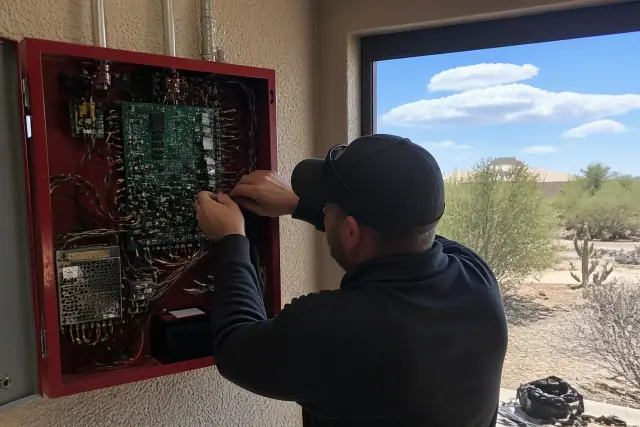
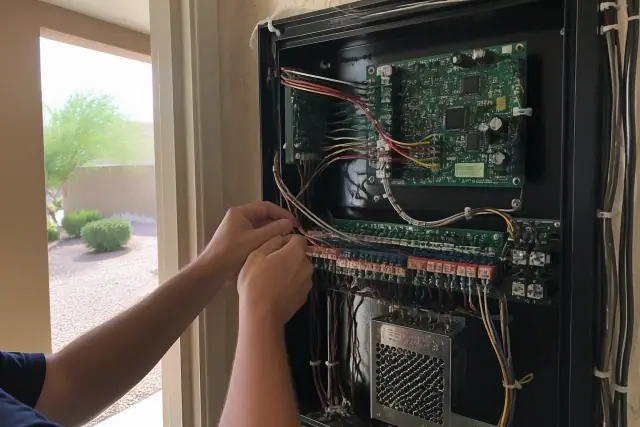
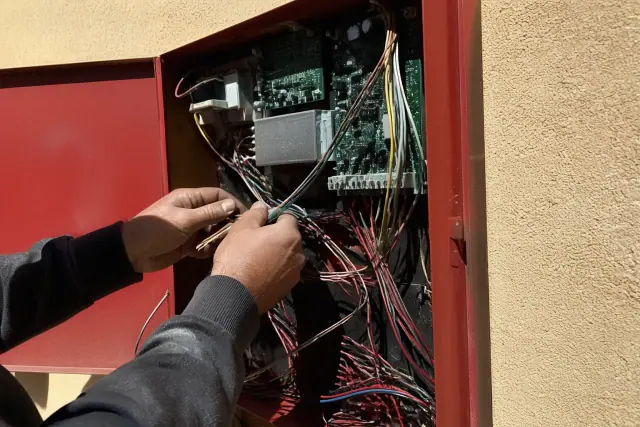
Technician wiring a fire alarm control panel in a Phoenix, AZ building with desert views visible through the window.

We design addressable panels around current NFPA 72 device-loop requirements, then run conduit and low-voltage cabling for Phoenix Fire Department rough-in review before drywall closes. Panel capacity reflects the present device count and practical expansion plans.

Request Estimate

Legacy Panel Upgrades and Replacement

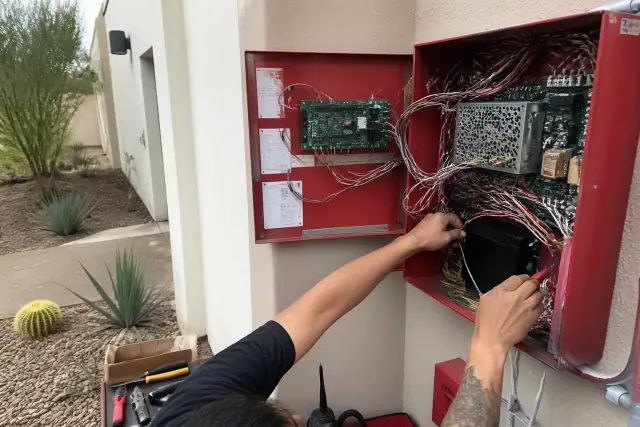
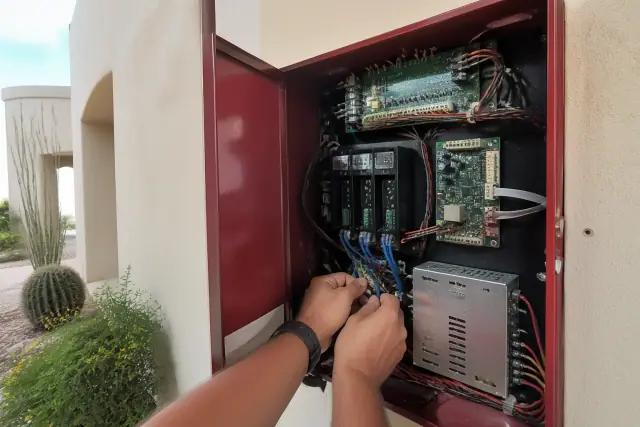
Technician wiring a fire alarm control panel inside a stucco building in Phoenix, AZ.

Many Phoenix commercial buildings still use panels installed 15-20 years ago, while commercial systems typically have a 10-15 year service life before components degrade. We assess board condition, parts availability, smoke chamber sensitivity, and battery capacity before recommending a targeted upgrade or complete replacement.

Request Estimate

Multi-Building Panel Networking

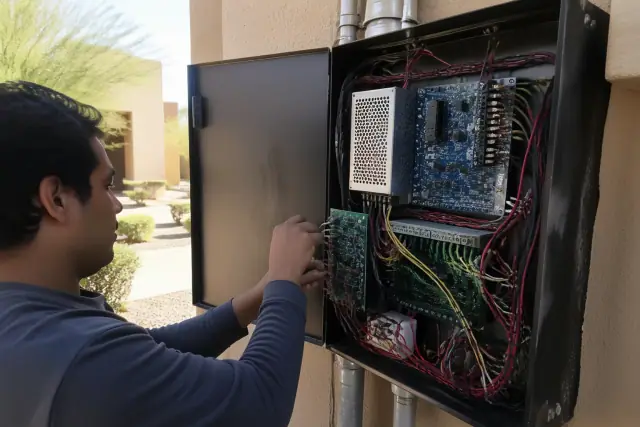
Technician wiring a multi-building fire alarm control panel inside a commercial building in Phoenix, AZ.

Campuses, apartment complexes, and industrial parks can use multiplex networking to report multiple panels to one fire command center. Building engineers and monitoring staff then receive zone information through a single interface.

Request Estimate

Inspection and Compliance Testing

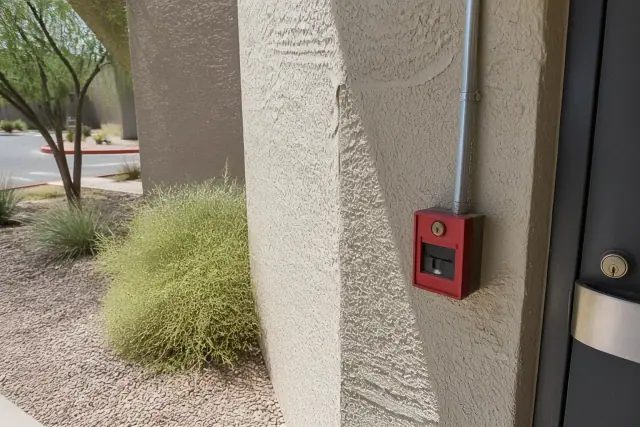
Technician inspecting a red fire alarm pull station by an exit door during a system check in Phoenix, AZ.

We functionally test initiating devices, notification appliances, supervisory equipment, and monitoring communication. Owners receive an NFPA 72-formatted report with device-by-device pass or fail results for their fire safety file.

Request Estimate

Repair and Preventive Maintenance

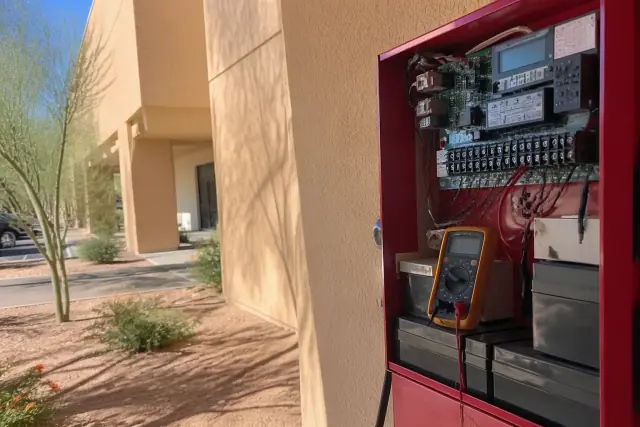
Technician using a multimeter on a fire alarm system terminal block at a commercial building in Phoenix, AZ.

Maintenance visits include smoke-chamber cleaning, sensitivity testing, panel diagnostics, and battery load testing. We also troubleshoot ground faults, open circuits, low-voltage alerts, and communication failures that leave a panel in trouble mode.

Request Estimate

Monitoring and Emergency Communications

Technician wiring a fire alarm control panel cabinet at a worksite in Phoenix, AZ.

We configure monitored panels to transmit alarm, supervisory, and trouble signals to a UL-listed central station operating around the clock. Voice evacuation, zoned speaker circuits, live-voice override, and mass notification integration support larger occupancies with phased emergency communication plans.

Request Estimate
Panel & Communication Options

Types of Fire Alarm Panel Options

The right platform depends on how precisely responders need to locate an alarm, how many devices the property uses, which building controls must operate, and how signals reach monitoring. We select compatible equipment rather than forcing every property into the same panel type.

Technician wiring the internal circuits of a fire alarm control panel in Phoenix, AZ.

Addressable Fire Alarm Panels

Addressable systems identify the exact detector, pull station, or module that changes state. That detail is especially useful in larger Phoenix properties where a zone-only signal could send staff and responders searching floor by floor.

  • Exact device address and location reporting
  • Programmable cause-and-effect logic
  • Device-loop design for larger properties
  • Detailed alarm, supervisory, and trouble signals
  • Capacity planned for supported expansion
Request Estimate
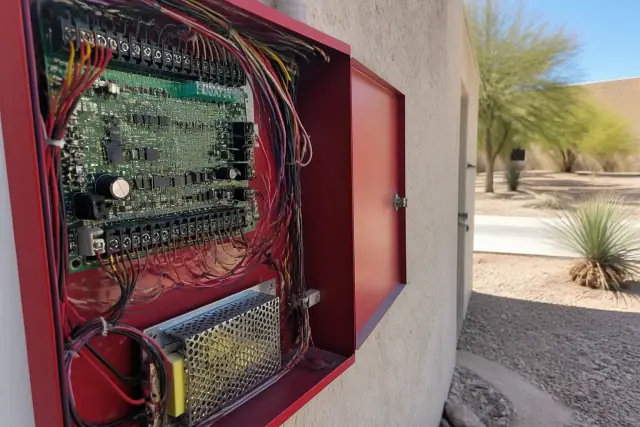
Technician wiring a conventional fire alarm control panel on a stucco wall at a jobsite in Phoenix, AZ.

Conventional Fire Alarm Panels

Conventional panels group initiating devices into zones instead of naming one exact device. They can fit smaller buildings with fewer than 20-30 devices when zone-level location is sufficient and budget matters more than pinpoint reporting.

  • Zone-based alarm identification
  • Practical for smaller device counts
  • Compatible smoke and heat detection circuits
  • Manual pull station supervision
  • Notification appliance circuit control
Request Estimate
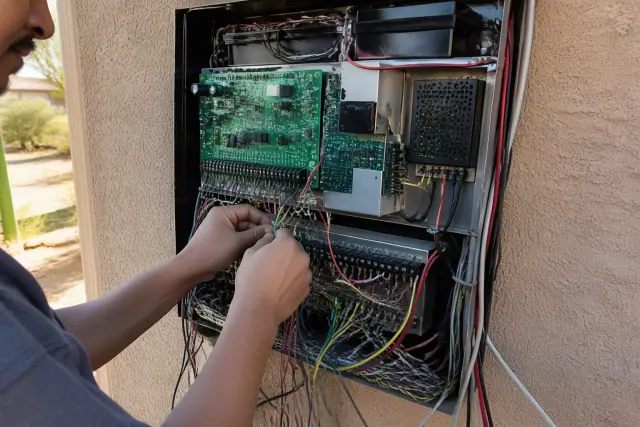
Technician wiring a fire alarm control panel on a stucco wall at a job site in Phoenix, AZ.

Networked and Integrated Panels

Networked systems bring multiple buildings or panels into a common interface, while integrated programming coordinates the equipment that must respond during an alarm. We configure these sequences to match the property's approved life-safety design.

  • Multiplex reporting to one fire command center
  • Elevator recall sequence integration
  • HVAC shutdown control
  • Door release hardware coordination
  • Shared zone visibility for facility staff
Request Estimate
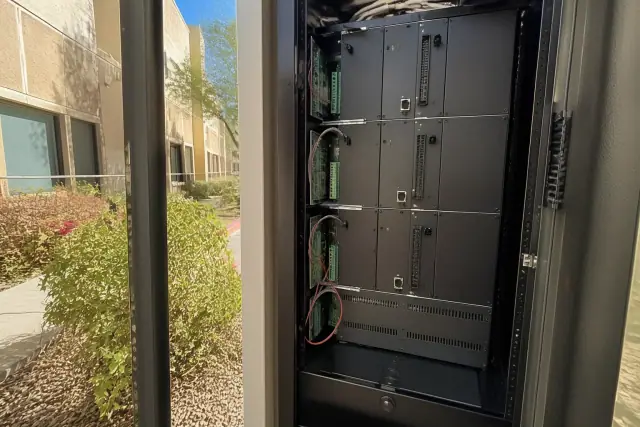
Technician inspecting voice evacuation amplifier cards in a server rack at a Phoenix, AZ commercial building jobsite.

Voice Evacuation and Mass Notification

High-rises, hospitals, and large assembly occupancies may use voice evacuation panels connected directly to the fire alarm control unit. Zoned circuits support phased instructions, while live-voice override lets authorized building staff or fire personnel broadcast real-time directions.

  • Integrated voice evacuation control
  • Multi-zone speaker circuits
  • Phased evacuation and relocation messaging
  • Live-voice emergency instructions
  • UL 2572 mass notification considerations
Request Estimate
Technician wiring a fire alarm control panel with monitoring communicators at a jobsite in Phoenix, AZ.

24/7 Monitoring Communicators

A monitored panel sends system events to a UL-listed central station staffed around the clock. Cellular or IP communicators can back up a primary phone line so one transmission failure does not isolate the property.

  • Alarm signal transmission
  • Supervisory event reporting
  • Trouble signal reporting
  • Specific zone or device details
  • Cellular or IP backup communication
Request Estimate
Finding Your Right Fit

Choosing the Right Fire Alarm Panel Approach

We compare building size, ceiling height, occupancy, detector environment, current device count, integration needs, and future expansion before selecting equipment. Kitchens, garages, and mechanical rooms may call for fixed-temperature heat detection, while larger properties often benefit from addressable reporting and networked controls.

Current Code Alignment

We scope the panel against the NFPA 72 edition, International Fire Code provisions, and Phoenix Fire Department amendments adopted for the property. Plan details account for panel and annunciator placement, notification requirements, and Knox Box coordination before final sign-off.

Licensed, NICET-Track Technicians

Our licensed fire alarm technicians bring NICET-track training in panel programming, circuit design, detection, signaling, monitoring, and battery calculations. They also work from manufacturer compatibility requirements when selecting panels and connected devices.

Functional Testing and Records

Every device is functionally tested instead of simply powered on. We maintain certificates of completion, as-built drawings, device schedules, inspection history, and device-by-device reports so owners have a clear compliance trail.

What Sets Us Apart

Why Choose Us for Fire Alarm Panel Installation?

Phoenix Fire Alarm Systems builds each proposal around the actual property rather than a generic checklist. We walk the site, pull the applicable code references, select compatible equipment, and document the completed work for future inspection and maintenance.

Request Site Assessment

Aging or Unsupported Panels

Frequent trouble signals, discontinued replacement boards, and an aging control unit can turn a planned upgrade into a forced replacement. We assess existing zone logic and safely decommission legacy equipment without leaving orphaned circuits live.

Ground Faults and Open Circuits

A ground fault, open circuit, or communication failure can leave the panel in trouble mode and compromise supervision. We trace the affected circuit, repair the fault, and confirm normal signaling instead of clearing the alert without correcting its cause.

Dust-Contaminated Detectors

Haboobs and construction dust can move through HVAC returns and collect inside detector housings. Chamber cleaning and sensitivity testing help identify devices that drift before contamination produces recurring alerts or failed test results.

Heat-Weakened Backup Batteries

Backup batteries have a rated service life of 3-5 years under normal conditions, but Phoenix summer heat above 110 degrees can accelerate degradation. We load-test battery capacity during scheduled visits rather than waiting for a low-voltage trouble signal.

Limited Capacity or Zone Detail

An undersized panel can restrict future expansion, while zone-only reporting can slow source location in a large property. We compare installed and planned devices with the response detail the building needs before recommending a panel architecture.

Incomplete Compliance Records

Missing as-built drawings, device schedules, or inspection reports make it harder to explain the system during occupancy renewal, insurance review, or later service. We produce a permanent record of installation details and functional test results.

How It Works

Our Fire Alarm Panel Process

Our process moves from site conditions and code requirements to compatible equipment, supervised installation, functional testing, and lasting records. Owners see the proposed scope before equipment is ordered.

01.

Site Assessment and Code Review

We walk the property, measure square footage and ceiling heights, review occupancy, count devices, and identify environmental concerns. The applicable NFPA 72 cycle and local Phoenix requirements shape the design basis.

02.

System Design and Equipment Selection

We choose the panel type, detector locations, notification appliances, and required integrations. Components are checked against UL-listed compatibility information so the circuit is built from equipment approved to work together.

03.

Conduit and Low-Voltage Rough-In

Conduit, cabling, device boxes, and panel placement are prepared for rough-in inspection before walls close. This stage also confirms annunciator access and the paths for supervised initiating and notification circuits.

04.

Panel Installation and Programming

Licensed technicians mount the panel, land supervised circuits, and program zones, device addresses, and cause-and-effect logic. Integrated sequences are configured before the system is placed into operation.

05.

Functional Testing and Integration

Every detector, pull station, horn, strobe, speaker, interface, backup battery, and monitoring path is functionally tested. We verify that programmed HVAC, elevator, door, and notification responses follow the approved sequence.

06.

As-Builts and Scheduled Service

We deliver as-built drawings, a device schedule, completion records, and test documentation for the permanent fire safety file. Inspection and maintenance cycles can then be scheduled around the property's devices and occupancy requirements.

Plan Your Panel Project

Schedule a Fire Alarm Panel
Consultation

Tell us whether you are planning a new system, replacing a legacy panel, correcting trouble signals, or preparing for inspection. We will walk the property, review the applicable requirements, and provide a written proposal before equipment is ordered.

Panel Installation Help

Fire Alarm Panel Installation FAQs

These answers cover panel selection, installation, testing, cost, monitoring, local conditions, and documentation for Phoenix properties. A site assessment is still needed to match the final design to the building and current adopted code.

Call Our Panel Team

No. Fire alarm design, programming, and NFPA 72 compliance require the appropriate Arizona Registrar of Contractors classification and panel-specific programming knowledge, beyond a general electrical license. Our technicians carry the applicable licensing and NICET-track experience in detection, signaling, and monitoring.

NFPA 72, the National Fire Alarm and Signaling Code, governs system design, installation, testing, and maintenance. Phoenix applies it alongside the International Fire Code and local Fire Department amendments, so the adopted code cycle must be confirmed for each project.

Basic residential installations typically range from $650 to $950 for standard smoke and heat detector coverage with a conventional panel. Commercial work can range from a few thousand dollars for a small addressable retail system to well over a hundred thousand for a large building with networked panels and voice evacuation. Monitoring typically adds $15 to $35 per month, depending on the central station and communication method.

The panel receives signals from smoke detectors, heat detectors, manual pull stations, and other initiating devices. It interprets those signals, activates horns, strobes, or speakers, and can send events to monitoring while coordinating elevator recall, door releases, and HVAC shutdown.

NFPA 72 calls for a full functional test of initiating devices, notification appliances, and monitoring communication at least annually for most occupancies. Certain supervisory and waterflow devices in higher-risk properties such as schools and hospitals may require quarterly or semiannual attention. Test documentation should remain available for fire marshal and insurance review.

The panel should be accessible to responding fire personnel, commonly near the main entrance or in a designated fire command room. It also needs protection from moisture, physical damage, and extreme ambient heat. Phoenix plan review checks panel and annunciator placement before installation is finalized.

National fire data cited in the source shows that the death rate per 1,000 reported home fires was reduced by 60 percent when smoke alarms operated properly. A functioning, documented system also supports occupancy permits, insurance requirements, and commercial lease obligations.

Commercial panels generally have a service life of 10 to 15 years before components degrade or replacement parts are discontinued. Heat cycling, dust exposure, battery history, trouble frequency, and manufacturer support can shorten or extend the useful life of an individual panel.

Addressable systems identify the exact device in alarm, which helps in larger or more complex properties. Conventional systems identify a zone and can suit smaller buildings with fewer devices. The decision should consider property size, occupancy, response needs, device count, integrations, and future expansion.

Summer heat can accelerate backup-battery degradation and stress panels mounted in unconditioned spaces. Haboobs and construction dust can collect in detector chambers and affect sensitivity. Battery load testing, chamber cleaning, sensitivity testing, and panel diagnostics address those local conditions.

The permanent fire safety file should include as-built drawings, a device schedule, completion records, inspection history, and device-by-device test results. These records help owners support occupancy renewal, insurance review, future maintenance, and later system changes.

Yes, when the approved system design calls for those integrations. The panel can initiate elevator recall, HVAC shutdown, and door release sequences, but the connected hardware, cause-and-effect programming, and functional testing must all match the building's life-safety requirements.

A monitored panel can send alarm, supervisory, and trouble signals to a UL-listed central station staffed around the clock. Addressable systems can include the specific device location, and cellular or IP communication can back up a primary phone line to reduce a single point of transmission failure.