Proudly serving Phoenix, Mesa, Glendale, Scottsdale, Tempe, Chandler & surrounding areasCall or Text 24/7: 602-449-8143
Aerial view of residential neighborhoods, desert washes, and low-rise buildings in Phoenix, AZ.

Fire Alarm Systems: Installation, Maintenance & Repair Services in Mesa, AZ

Phoenix Fire Alarm Systems designs, installs, and services fire alarm systems for residential, commercial, and industrial properties throughout Mesa. Our services include new system installation, commercial fire alarms, inspection and testing, monitoring, repair and troubleshooting, maintenance, system design, panel service, upgrades, and voice evacuation or mass notification. We size and configure each system around the building, occupancy, and budget instead of relying on a one-size-fits-all layout.

Mesa's desert conditions put added stress on detector heads, wiring, batteries, and panel electronics. Attic temperatures regularly exceed 140 degrees in summer, while dust storms, monsoon humidity swings, and power surges can create faults or shorten component life. Our state-certified technicians engineer work to NFPA 72 and the fire code adopted by the City of Mesa, then prepare the documentation required for local review. That local process knowledge helps property owners avoid layouts that overlook occupancy, ceiling height, or notification coverage.

Mesa's growth into Arizona's third-most populous city has created a varied mix of mid-century homes, newer communities, retail centers, medical buildings, warehouses, and industrial facilities. We serve Downtown Mesa, Eastmark, Las Sendas, Red Mountain, Dobson Ranch, the Fiesta District, Superstition Springs, and surrounding East Valley cities named in our service coverage.

★ ★ ★ ★ ★4.9/5 Average Rating - 20+ Years of Experience - Mesa Fire Alarm Systems Specialists - Residential & Commercial
Complete Fire Alarm Services

Fire Alarm Services in Mesa, AZ

A mid-century ranch near Downtown Mesa, a warehouse near Falcon Field, and a retail center on Baseline Road require different detection, notification, and documentation strategies. We adapt layouts to each property's occupancy, ceiling height, square footage, and existing infrastructure, and we apply that same building-specific approach for clients reviewing service in Glendale, AZ .

Fire Alarm System Installation

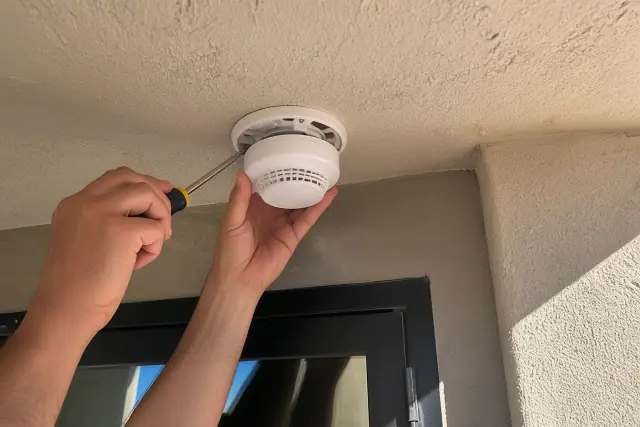
Technician installing a smoke detector on a commercial ceiling in Mesa, AZ.

Installations begin with a site walk and continue through panel setup, initiating and notification device placement, wiring, programming, testing, and closeout paperwork. Residential, commercial, and industrial layouts are configured around occupancy and building conditions rather than a generic parts list.

Explore Service

Commercial Fire Alarm Systems

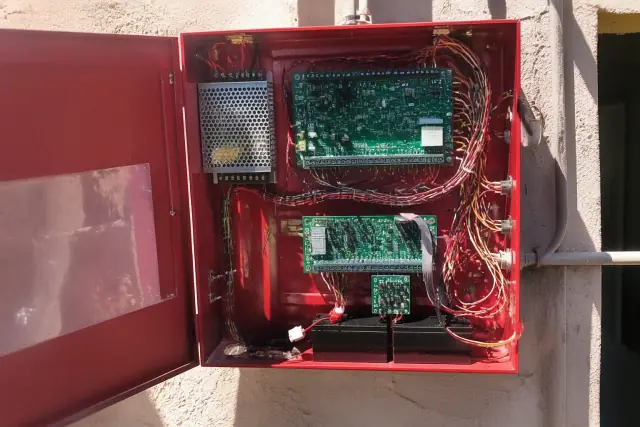
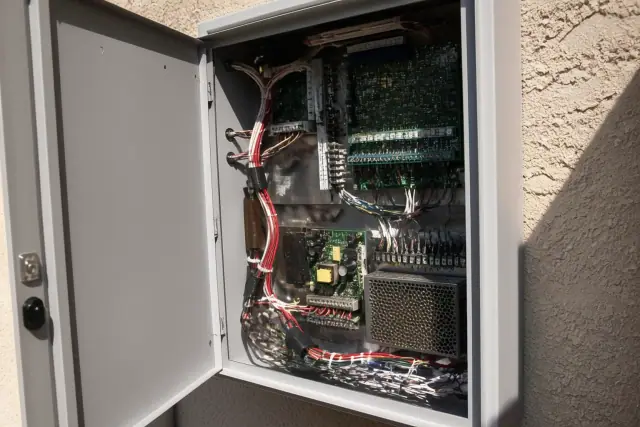
Open fire alarm control panel cabinet with multicolored wiring and circuit boards on a stucco wall in Mesa, AZ.

A single-story office near Mesa Riverview needs a different notification layout than a three-story medical building off US-60 or manufacturing space in the Elliot Road Technology Corridor. We size commercial systems to square footage, ceiling height, and occupancy classification, then commission them with documentation for certificate-of-occupancy or annual inspection needs.

Explore Service

Fire Alarm Inspection & Testing

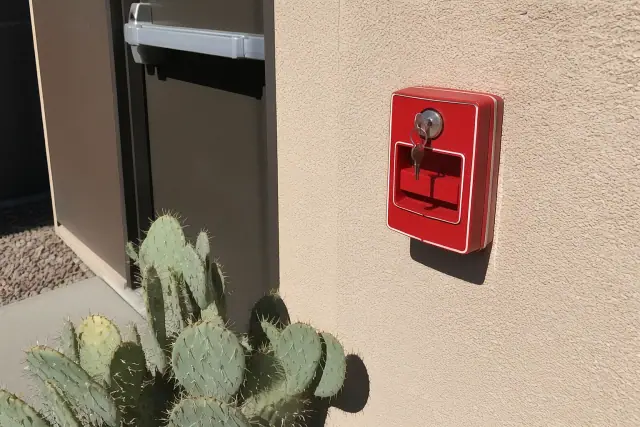
Red fire alarm pull station with a test key inserted on a stucco wall in Mesa, AZ, framed by prickly pear cactus.

Inspection and testing cover every initiating device, notification appliance, and panel supervisory circuit. We document results by device for Mesa Fire and Medical Department review and track the required schedule according to system component and occupancy.

Explore Service

Fire Alarm Monitoring

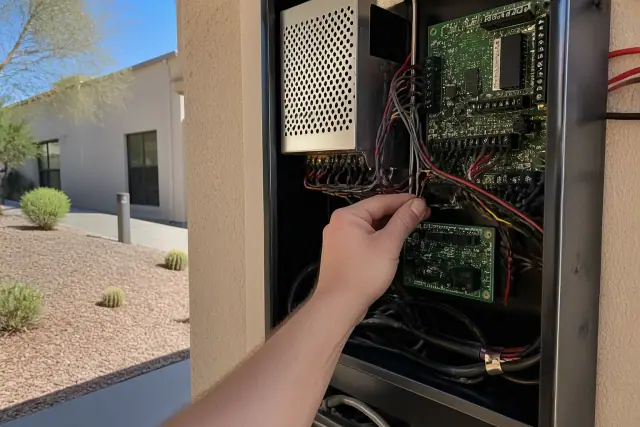
Technician wiring a fire alarm control panel in Mesa, AZ, with visible circuits and power supply components.

Our 24/7 monitoring connects the fire alarm panel to a central station that can dispatch emergency response when an alarm signal arrives. Supervised phone or cellular signals also flag a dropped connection so a communication problem does not remain hidden.

Fire Alarm Repair & Troubleshooting

Technician wiring a fire alarm control panel with multicolored circuits at a jobsite in Mesa, AZ.

We diagnose ground faults, open circuits, dead batteries, failed detector heads, and recurring trouble signals by reading panel history and testing the affected circuits. Many problems can be resolved during the same visit when the underlying equipment remains serviceable.

Fire Alarm Maintenance

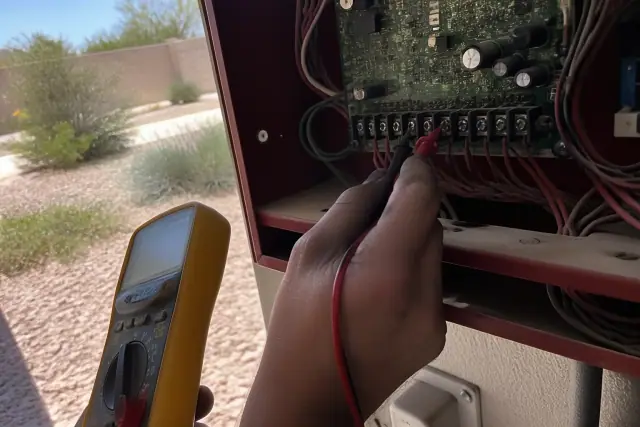
Technician using a multimeter to test a fire alarm system terminal block during maintenance in Mesa, AZ.

Scheduled maintenance includes battery load testing, detector sensitivity checks, and wiring inspection at connection points exposed to Arizona dust and heat cycling. Proactive service helps identify components nearing the end of service life before they cause a fault or failed inspection.

Fire Alarm System Design

Technician wiring a fire alarm control panel inside a building in Mesa, AZ.

System design begins with occupancy type, square footage, ceiling height, existing infrastructure, and notification needs. We prepare stamped drawings with device layout, circuit wiring, panel specifications, and battery calculations for review by the Mesa Building Safety Division and fire marshal's office.

Fire Alarm System Replacement & Upgrades

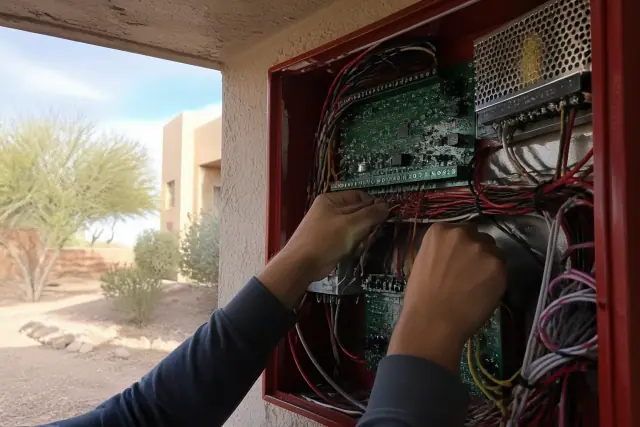
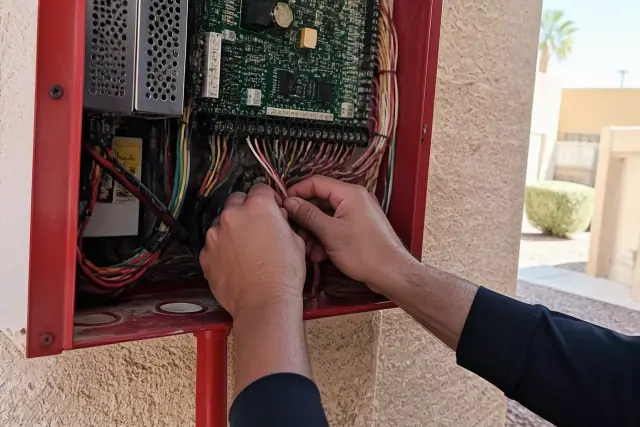
Hands wiring multicolored circuits inside a wall-mounted fire alarm control panel in Mesa, AZ.

Panels more than 15-20 years old often have limited parts support and may not meet current addressable requirements. We test existing wiring, retain it when it remains sound, and replace obsolete components so an upgrade stays proportional to the building's actual needs.

Fire Alarm Panel Installation & Service

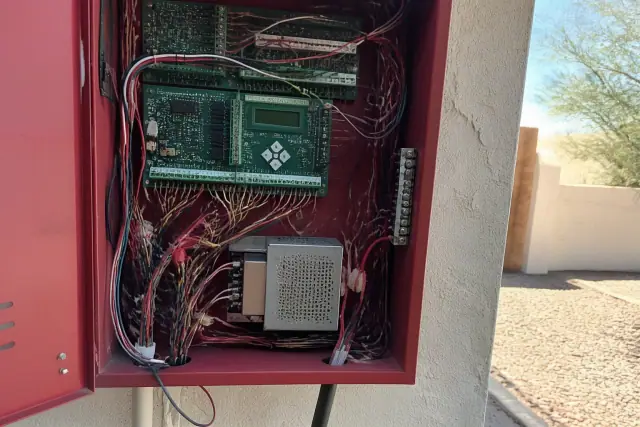
Technician wiring a fire alarm control panel cabinet on a stucco wall in Mesa, AZ.

We install and program addressable and conventional fire alarm control panels listed to UL 864. Each panel is sized to the device count with room for future expansion, placed for accessibility, and programmed with zone mapping that helps responders identify the alarm location.

Voice Evacuation & Mass Notification Systems

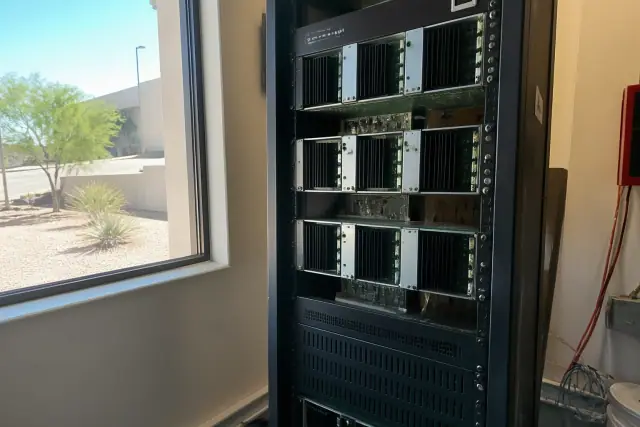
Technician inspecting modular amplifier cards in a fire alarm voice evacuation system rack in Mesa, AZ.

Voice evacuation systems provide prerecorded and live-page instructions for high-rise offices, schools, and large assembly occupancies where standard horn-strobe notification may not be enough. For campuses, government buildings, and multi-tenant complexes, mass notification can coordinate audible, visual, and text-based emergency messaging.

System Selection

How to Choose a Fire Alarm System for Mesa Properties

The right fire alarm solution starts with the building, not a catalog. Compare occupancy needs, code-ready design, panel capacity, monitoring supervision, integration requirements, and the system's remaining service life before choosing equipment or approving a scope.

Building and Occupancy Fit

A useful site assessment measures ceiling heights, notes HVAC returns that can affect smoke detector placement, confirms square footage, and identifies the occupancy classification. Those details determine device spacing, notification coverage, and the appropriate system layout.

Code-Ready System Design

Choose a design that accounts for NFPA 72, the locally adopted International Building Code, and Mesa's plan-review process before installation starts. Accurate device layouts, circuit details, panel specifications, and battery calculations reduce the risk of plan rejections or mid-project changes.

Panel Capacity and Zone Mapping

Addressable and conventional panels should be evaluated against device count, accessibility, occupancy needs, and future expansion. Clear zone mapping is equally important because it helps responding firefighters pinpoint where an alarm originated.

Monitoring and Signal Supervision

A monitored system sends alarm activity to a central station even when no one is on-site. Confirm that the communication path is supervised so dropped phone or cellular connections create a visible trouble condition that can be addressed.

Life-Safety System Integration

Where applicable, the fire alarm should coordinate with access control, sprinkler monitoring, and elevator recall. Planning those connections together produces one coordinated life-safety response instead of separate systems that were never designed to communicate.

Lifecycle and Expansion Planning

Review parts support, fault history, wiring condition, and available panel capacity before deciding between repair and replacement. A sound design leaves room for future devices while avoiding a full system replacement when tested wiring and supported components can remain.

Mesa Fire Alarm Issues

Common Fire Alarm Problems in Mesa Properties

Heat, airborne dust, monsoon moisture, electrical surges, and aging connections can all produce trouble signals or shorten component life in Mesa. Inspection should separate a serviceable fault from obsolete equipment so property owners can make a proportionate repair or replacement decision.

Request System Inspection

Dust-Clogged Detector Heads

Mesa dust can collect inside detector heads and alter sensitivity, leading to nuisance alarms or unreliable response. Sensitivity checks and careful cleaning help determine whether a detector can stay in service or should be replaced.

Extreme Attic Heat

High attic temperatures accelerate wear on wiring insulation, batteries, and electronic components, especially in single-story homes with equipment routed through attic space. Heat-related faults should be traced to the affected connection or component rather than treated as a reason to replace the entire system automatically.

Monsoon Moisture and Power Surges

Monsoon humidity swings can contribute to corrosion at vulnerable connection points, while storm-related power surges can disrupt panel electronics. Post-storm troubleshooting should include panel history, circuit checks, and inspection of exposed connections.

Aging Backup Batteries

Weak or dead backup batteries often trigger panel trouble conditions and may leave the system without dependable standby power. A battery load test shows whether the battery can still carry the required demand instead of relying only on its age or appearance.

Ground Faults and Loose Wiring

Ground faults, open circuits, and loose junction-box connections can create intermittent trouble signals that are difficult to diagnose without panel history and circuit testing. Isolating the affected run allows targeted repair when the remaining wiring tests sound.

Nuisance Alarms and Permit Penalties

Mesa Alarm Ordinance 6-15 requires an active permit for monitored systems, and the cited fee schedule starts at $100 for an early false-alarm offense and climbs toward $300-$400 for repeated activations. Correct device placement, clean detector heads, sound wiring, and regular testing help reduce avoidable alarms.

Why Choose Us

Why Choose Phoenix Fire Alarm Systems in Mesa?

Fire alarm work affects permitting, building operations, emergency notification, and long-term inspection records. Phoenix Fire Alarm Systems combines local code coordination, state-certified field work, and design-to-service support for Mesa homes, commercial properties, and industrial facilities.

Mesa Permit Coordination

We prepare system documentation for the Mesa Building Safety Division and the fire marshal's office, then test the completed installation before the local inspection. Our work aligns with NFPA 72, the adopted International Fire Code, and the city channels used for permits and sign-off.

State-Certified Technicians

Our licensed and insured company uses state-certified technicians for installation, programming, testing, maintenance, and repair. Work follows manufacturer specifications and the applicable requirements for wire gauge, device spacing, accessibility, and system records.

Design-to-Service Support

Property owners and managers have one point of contact for design, installation, permitting, monitoring, and ongoing service. Our crews work across residential retrofits, mid-rise commercial buildings, industrial facilities, and scopes ranging from a single-panel replacement to a full-building installation.

Code-Focused Process

Our Fire Alarm Installation Process in Mesa

Each project moves from a building-specific assessment through design, local review, installation, verification, and ongoing support. The sequence keeps equipment choices tied to the approved scope and produces the records needed for inspection and future service.

01.

Assess the Building

We walk the property to document occupancy type, square footage, ceiling height, HVAC conditions, existing wiring, panel location, and notification needs.

02.

Engineer the System

The design identifies device layout, circuit wiring, panel specifications, zoning, notification coverage, and battery calculations for the proposed system.

03.

Submit Plans for Review

Stamped drawings and supporting documents go through the City of Mesa review process before permitted installation work begins.

04.

Install and Configure

Our crews run wiring, mount initiating and notification devices, install the panel, program zones, and configure system integrations to match the approved design.

05.

Test and Document

Every device is function-tested, panel programming is checked against the drawings, and results are documented before the fire marshal inspection is scheduled.

06.

Monitor and Maintain

After commissioning, the system can move into central-station monitoring and scheduled maintenance, with service records kept current for inspections, repairs, and future expansion.

System Outcomes

Fire Alarm Outcomes for Mesa Properties & Businesses

Case Study 1: Residential Retrofit: Hardwired, interconnected smoke and heat detection can be planned around bedroom count, hallway length, floor plan, and available attic access, often without major drywall repair.

Case Study 2: Commercial Commissioning: Occupancy-based device placement, verified panel programming, notification coverage, and complete documentation support certificate-of-occupancy and annual inspection requirements.

Case Study 3: Ongoing Compliance: Device-level test records, scheduled maintenance, and early identification of aging components keep the system easier to inspect, troubleshoot, and expand.

Plan Your Project

Schedule a Mesa
Fire Alarm
Assessment

Tell us about the property, existing system, inspection concern, or planned construction. We will assess the site and prepare a written scope and estimate based on the building, required equipment, permitting, and service needs.

Mesa Fire Alarm Help

Fire Alarm System FAQs for Mesa, AZ

These answers cover common questions about Mesa fire alarm costs, timelines, inspections, permits, monitoring, repairs, and system selection. A site assessment is still necessary for a building-specific scope.

Call Our Fire Alarm Team

Industry-wide labor rates for fire alarm work generally run $100 to $400 per hour depending on complexity, while total cost changes with building size, occupancy, device count, panel type, and whether the project is new or a retrofit. Phoenix Fire Alarm Systems provides a written scope and estimate after a site assessment.

A residential system typically takes one to two days. Commercial work can take a few days to several weeks depending on building size, new-construction or retrofit conditions, equipment lead time, permit review, and inspection scheduling.

NFPA 72 inspection intervals vary by device and system type. Most systems require a full annual inspection, while some components are tested quarterly or semiannually; current documentation should remain available for Mesa commercial occupancies.

If a panel is under 15 years old, parts remain supported, and the wiring tests sound, targeted repair may be the better financial choice. Obsolete equipment, repeated age-related faults, missing addressable capability, or unavailable parts can make replacement more practical.

Yes. Mesa Alarm Ordinance 6-15 requires an active permit for monitored alarm systems. Permit submission is handled as part of installation so the system can be registered through the city's process.

A monitored system sends an alarm to a central monitoring station so emergency response can be dispatched even when no one is on-site. An unmonitored system sounds locally and depends on someone hearing it and calling for help.

Homeowners can install basic battery-powered smoke detectors, but interconnected, monitored, and commercial systems require certified fire alarm work under NFPA 72 and Arizona licensing requirements. Device spacing, circuit wiring, panel programming, documentation, and inspection all affect whether the completed system complies and functions as intended.

The services cover residential, commercial, and industrial properties, including single-family homes, offices, retail centers, medical buildings, self-storage facilities, warehouses, schools, campuses, and multi-tenant complexes. The system layout is adjusted to the property's occupancy, size, ceiling conditions, and notification needs.

The choice depends on device count, occupancy, zoning needs, accessibility, existing infrastructure, and plans for future expansion. The panel is sized and programmed for the approved design rather than selected from a generic parts list.

Testing includes functional checks of initiating devices, notification appliances, panel programming, supervisory circuits, and battery performance where applicable. Results are recorded by device, and components nearing the end of service life are flagged in the compliance report.

Common causes include dust-clogged detector heads, aging batteries, loose wiring, ground faults, open circuits, heat-stressed electronics, and storm-related power issues. Panel history and circuit testing help isolate the cause before repair or replacement is recommended.

Yes, where applicable. Fire alarms can be coordinated with access control, sprinkler monitoring, and elevator recall so the building's life-safety functions respond as one planned system.

Voice evacuation is suited to high-rise offices, schools, and large assembly occupancies that need prerecorded or live-page instructions. Mass notification can add visual, audible, and text-based messaging for campuses, government buildings, and multi-tenant complexes.

Desert dust can change detector sensitivity, high heat can accelerate wear on batteries and electronics, and monsoon moisture or power surges can affect wiring connections and panels. Scheduled sensitivity checks, battery load testing, and connection-point inspections address those local stresses.

Industry research cited for proactive maintenance points to roughly a 400 percent return on investment and a 12-18 percent reduction in overall maintenance costs compared with reactive service. Scheduled checks also help identify aging components before they create faults, false alarms, or inspection problems.