Proudly serving Phoenix, Mesa, Glendale, Scottsdale, Tempe, Chandler & surrounding areasCall or Text 24/7: 602-449-8143
Aerial view of residential neighborhoods, desert washes, and low-rise buildings in Phoenix, AZ.

Fire Alarm System Installation & Preventive Maintenance Services in Glendale, AZ

Phoenix Fire Alarm Systems installs fire alarm systems for residential, commercial, and industrial properties throughout Glendale, Arizona. We design new systems and provide commercial fire alarm systems matched to occupancy, square footage, and building use. Our technicians also handle fire alarm inspection and testing, monitoring, repair, maintenance, panel service, system upgrades, and voice evacuation systems. Each project is planned for code compliance and dependable long-term operation.

Glendale summer temperatures regularly push past 110 degrees, while dust storms and monsoon humidity swings can strain wiring, batteries, panel components, and detector sensitivity. Those conditions make heat-rated components, deliberate detector placement, and corrosion checks especially important. Our state-certified technicians plan work around NFPA 72, city review, and the property's occupancy and construction type. Call us to discuss a system sized for your building instead of a one-size-fits-all layout.

Glendale's roughly 248,325 residents live and work amid established homes, new commercial construction, older strip centers, and industrial properties. From Catlin Court to State Farm Stadium and the Glendale Municipal Airport corridors, we adapt the system approach to the building.

★ ★ ★ ★ ★4.9/5 Average Rating - 20+ Years of Experience - Glendale Fire Alarm Systems Specialists - Residential & Commercial
Complete Fire Alarm Services

Fire Alarm Services in Glendale, AZ

New construction, tenant improvements, existing-system retrofits, and phased upgrades each call for different planning. Explore the service categories below to see how design, installation, inspection, monitoring, repair, and ongoing maintenance fit together. If you are coordinating a second property, our Scottsdale, AZ location page provides service details for that market.

Fire Alarm System Installation

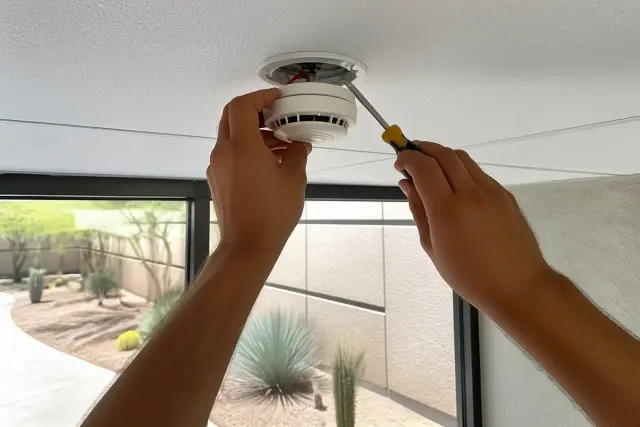
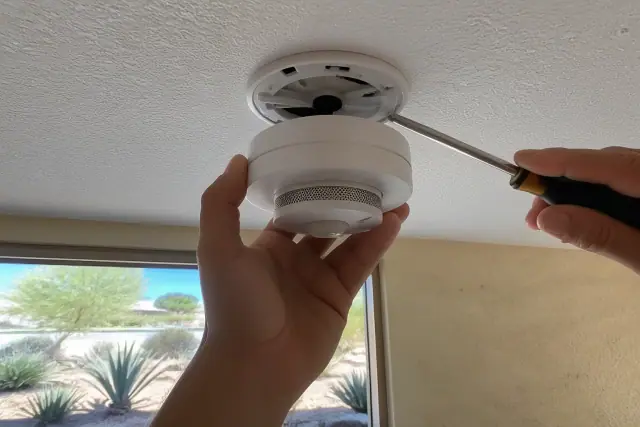
Technician mounting a smoke detector onto a commercial ceiling in Glendale, AZ with desert landscaping in the background.

We size residential and commercial installations to occupancy, square footage, floor plan, and building use. Most single-family residential installations are completed in a single day, with detectors placed in bedrooms, hallways, and common areas according to manufacturer spacing guidance.

Explore Service

Commercial Fire Alarm Systems

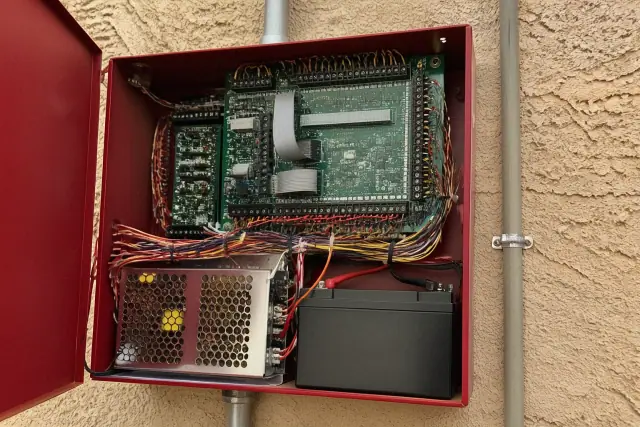
Technician wiring a fire alarm control panel inside a building in Glendale, AZ.

Addressable systems give multi-tenant properties precise device identification, while industrial designs account for higher ambient heat and dust. Commercial installations are coordinated with NFPA 72 requirements and Glendale Fire Department review before final sign-off.

Explore Service

Fire Alarm Inspection & Testing

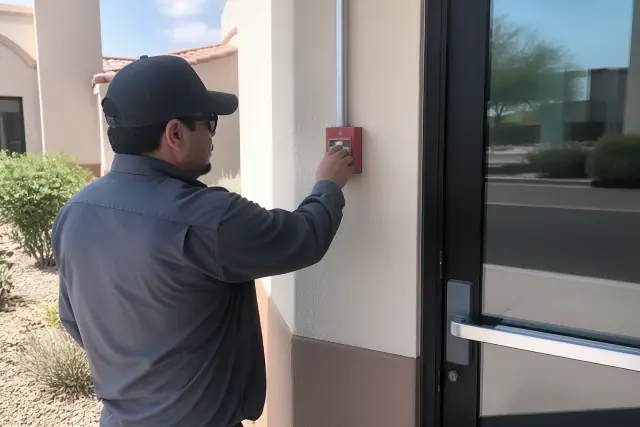
Technician inspecting a manual fire alarm pull station on a building exterior in Glendale, AZ.

Annual inspection and testing covers initiating devices, notification appliances, and panel supervisory functions at NFPA 72 frequencies. We document results and identify deficiencies in writing for your records and city review when requested.

Explore Service

Fire Alarm Monitoring

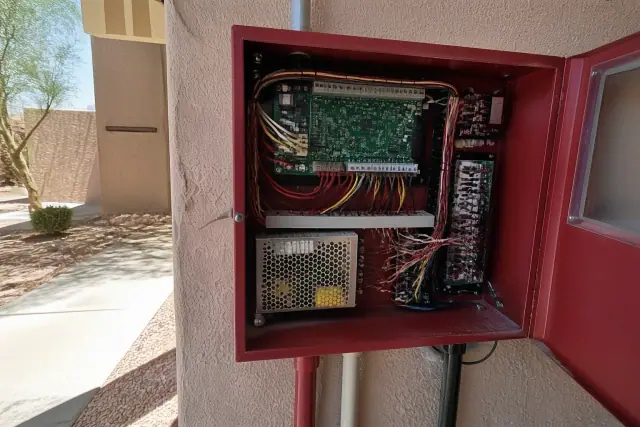
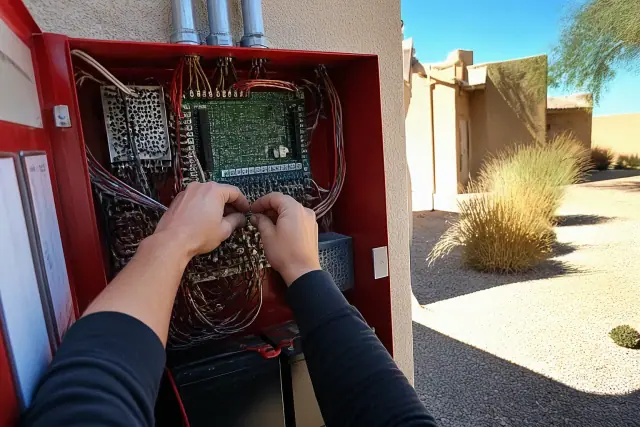
Technician hands wiring a fire alarm control panel on a stucco wall in Glendale, AZ.

Our 24/7 monitoring service sends alarm signals to a central station through cellular or IP communicators for responder dispatch. It is especially relevant to unoccupied commercial buildings and properties under a fire watch requirement.

Fire Alarm Repair & Troubleshooting

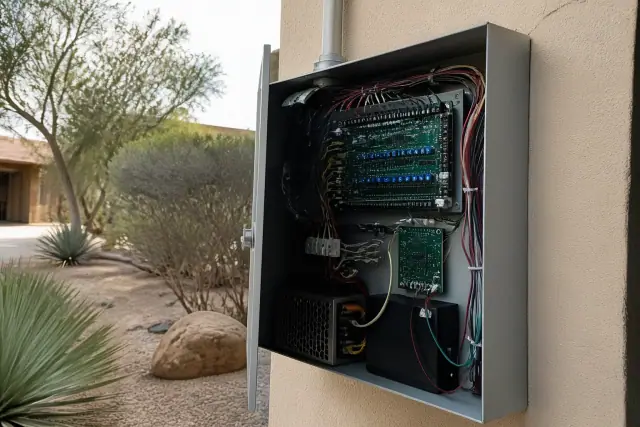
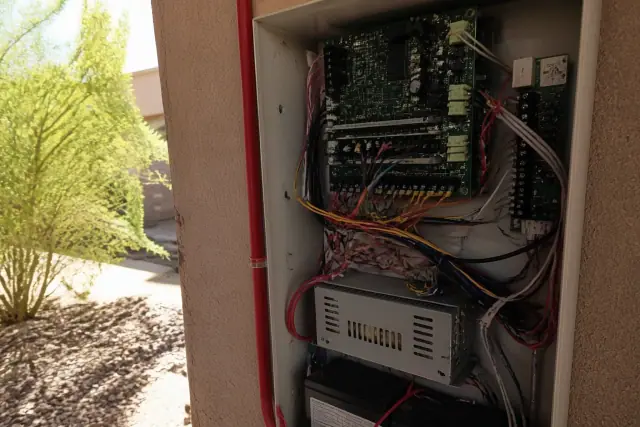
Open fire alarm control panel with exposed wiring and diagnostic equipment on a stucco wall in Glendale, AZ.

We diagnose ground faults, nuisance alarms, and dead zones by starting at the panel, walking loop wiring, and isolating the failed device. Emergency service is available when an active fault puts occupancy or compliance at risk.

Fire Alarm Maintenance

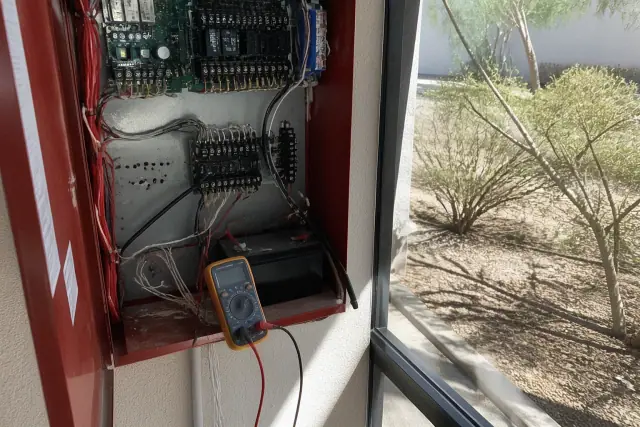
Multimeter testing fire alarm system terminal block wiring during maintenance in Glendale, AZ.

Scheduled maintenance includes detector-head cleaning, standby-battery voltage checks, and inspection of wiring connections for corrosion. Those steps help catch heat-, dust-, and monsoon-related problems before they become code deficiencies.

Fire Alarm System Design

Technician wiring a fire alarm control panel inside a building in Glendale, AZ.

Design begins with occupancy classification, square footage, construction type, and the existing infrastructure. We produce shop drawings and battery calculations that meet Arizona State Fire Marshal review standards and Glendale plan review requirements for new construction, tenant improvements, and additions.

Fire Alarm System Replacement & Upgrades

A smoke detector being installed on a commercial ceiling in Glendale, AZ with desert landscaping visible in the background.

Commercial systems typically last 10 to 15 years before limited parts availability and code drift can make replacement more practical than continued repair. We handle panel swaps, conventional-to-addressable migrations, and phased upgrades for buildings that cannot take the full system offline at once.

Fire Alarm Panel Installation & Service

Technician wiring a fire alarm control panel cabinet on a stucco wall at a job site in Glendale, AZ.

Panel work includes installation, programming of zones and output relays, and communicator setup to match the approved building design. Every panel replacement receives full point-by-point testing before completion.

Voice Evacuation & Mass Notification Systems

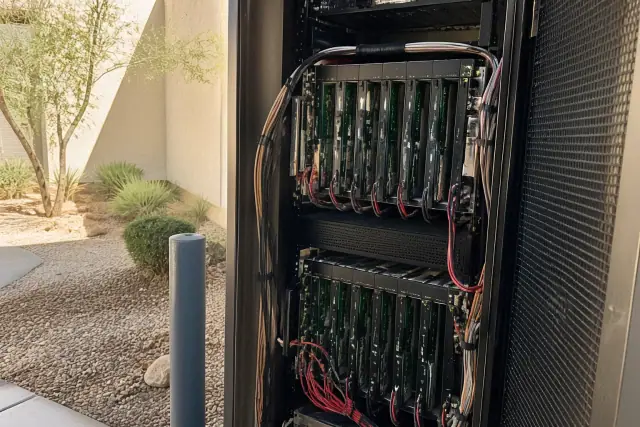
Technician inspecting fire alarm voice evacuation amplifier cards in a server rack in Glendale, AZ.

For larger occupancies, schools, and assembly buildings, voice systems deliver prerecorded or live evacuation instructions in place of horn-strobe notification alone. They integrate with the fire alarm panel and can carry non-fire emergency messages when the approved design requires it.

System Planning

How to Choose the Right Fire Alarm System in Glendale

A smaller property with a straightforward layout may work well with conventional zoning, while a multi-tenant or industrial building can benefit from addressable device identification. The six factors below help align detection, notification, monitoring, wiring, and approval requirements with the property.

Building Classification & Layout

Occupancy classification, square footage, construction type, and floor plan determine the coverage approach. Device placement must account for bedrooms, common areas, tenant divisions, and the property's actual use.

Conventional or Addressable Control

Conventional systems report by zone and suit simpler layouts, while addressable systems identify individual devices for more precise location reporting. Analog addressable and wireless options add sensor-value reporting or retrofit flexibility when the project calls for them.

Heat, Dust & Moisture Exposure

Glendale's extreme summer heat, airborne dust, and monsoon moisture can shorten component life or affect detector performance. Component ratings, detector placement, cleaning access, and corrosion checks should reflect those conditions.

Wiring & Retrofit Pathways

New construction can use planned conduit, wiring, and device boxes; retrofits may need to reuse available pathways or use wireless devices where new wiring is impractical. The pathway choice affects project scope and disruption.

Monitoring & Notification Needs

Cellular or IP monitoring communicators connect the panel to central-station response, while building size and occupancy determine whether horns and strobes or intelligible voice instructions are appropriate. The approved design should coordinate both alarm and notification functions.

Permitting & Acceptance Testing

Commercial work requires City of Glendale plan review before installation and a fire-department witness test before final acceptance. Shop drawings, battery calculations, test records, and complete documentation help keep that process moving.

Glendale Fire Alarm Issues

Common Fire Alarm Problems in Glendale

Glendale fire alarm problems often reflect both the age of the building and the West Valley climate. Symptoms can appear at the panel, along an addressable loop, inside detector heads, or at corroded wiring connections, so diagnosis should isolate the cause before parts are replaced.

Request Troubleshooting

Heat-Stressed Components

Sustained high temperatures can strain panel electronics, detector sensitivity, wire insulation, and standby batteries. Heat-rated parts and placement away from damaging conditions help reduce premature performance loss.

Dust-Contaminated Detectors

Dust storms can load detector heads and contribute to sensitivity problems or nuisance alarms. Scheduled cleaning and device testing reveal whether a detector needs maintenance or replacement.

Monsoon Moisture & Corrosion

Occasional monsoon moisture infiltration can corrode wiring connections and compromise otherwise sound equipment. Maintenance should inspect affected connections and components for signs of moisture exposure.

Ground Faults & Wiring Defects

Ground faults require a systematic check from the panel through the loop wiring. Isolating the failing section or device avoids replacing unrelated components blindly.

Nuisance Alarms & Loop Dead Zones

Nuisance alarms and dead zones on addressable loops are common concerns in older commercial systems. Starting at the panel and testing along the loop helps distinguish a sensitivity issue from a wiring or device fault.

Aging Panels & Unsupported Parts

Older conventional and analog components may no longer have manufacturer support. As a system ages, limited parts availability and code drift can make a planned upgrade more sensible than repeated repairs.

Why Choose Us

Why Choose Phoenix Fire Alarm Systems in Glendale?

We do not subcontract core electrical work, so design, installation, monitoring, inspection, and maintenance stay connected. Our technicians are state certified and factory trained on the addressable and conventional platforms we install, and we carry the Arizona Registrar of Contractors licensing required for fire alarm work. We coordinate permits, inspections, documentation, and follow-up service around the system's full lifecycle.

State-Certified, Factory-Trained Technicians

Every technician assigned to your property is state certified and trained on the panel platforms we install. That platform knowledge supports accurate programming, testing, and troubleshooting across conventional and addressable systems.

Transparent Project Scope & Pricing

National fire alarm technician wages run between $17 and $22 per hour at the technician level according to Bureau of Labor Statistics data, but that figure does not determine the full installation quote. Device count, panel complexity, and the need for new wiring pathways are the primary project cost drivers, and we explain those factors before work starts.

Integrated Service & Follow-Up

The same team can carry a project from design and permitting through installation, monitoring, inspection, maintenance, and upgrades. Follow-up service is available if installed equipment is not performing as designed.

Installation Process

Our Fire Alarm Installation Process in Glendale

We move from a property-specific site walk to design, permitting, installation, testing, and city acceptance. Each stage prepares the documentation and field conditions needed for the next step.

01.

Site Assessment & System Design

We assess construction type, occupancy classification, square footage, layout, and existing infrastructure. Those findings guide device coverage, system type, shop drawings, and battery calculations.

02.

Permit Submission & Plan Review

We submit the fire alarm plan to the City of Glendale and coordinate review before commercial work begins. Required documents are prepared around local and Arizona State Fire Marshal review requirements.

03.

Wiring & Device Rough-In

The crew installs wiring, conduit, and device boxes for hardwired systems or programs wireless devices for appropriate retrofit projects. Existing pathways are evaluated before new routes are added.

04.

Panel Programming & Monitoring Integration

We install and program zones, output relays, and communicator settings to match the approved design. Cellular or IP monitoring is integrated when included in the project.

05.

Detection & Notification Installation

Smoke detectors, heat detectors, pull stations, and notification appliances are placed according to the approved layout and manufacturer guidance. Voice evacuation components are added when the occupancy design calls for them.

06.

System Testing & Final Acceptance

We perform point-by-point testing, verify battery calculations and voltage drop, and correct documented deficiencies. The project then proceeds to the fire-department witness test and final acceptance documentation.

Property Applications

Fire Alarm Solutions for Glendale Properties

Case Study 1: Residential installation: A home system is sized to the floor plan with detection in bedrooms, hallways, and common areas, keeping the installation straightforward and code-aware.

Case Study 2: Commercial retrofit: An aging conventional panel can be migrated to addressable control in phases when a building cannot take the entire system offline at once.

Case Study 3: Large-occupancy notification: Schools and assembly buildings can pair the panel with intelligible prerecorded or live voice instructions when the approved design requires them.

Plan Your Fire Alarm Project

Schedule a Fire
Alarm System
Consultation

Tell us whether you are planning new construction, a retrofit, an inspection, or troubleshooting an active fault. We will review the property, explain the factors that shape the scope, and coordinate the appropriate next step.

Glendale Fire Alarm Help

Fire Alarm FAQs for Glendale, AZ

These answers cover system selection, Arizona smoke-detector rules, installation timing, inspection, monitoring, upgrades, and Glendale service coverage. For property-specific guidance, call with your building type, current panel information, and the issue you need to solve.

Call Our Fire Alarm Team

Look for state-certified technicians, current Arizona Registrar of Contractors licensing, experience with your building type, and factory training on the proposed panel platform. A qualified contractor should also handle permits, fire-department acceptance testing, documentation, and ongoing service instead of leaving those steps fragmented among vendors.

Yes. Arizona Revised Statutes require smoke detectors in residential dwellings, with placement requirements tied to bedrooms and sleeping areas; rental properties also carry landlord installation and maintenance duties. Commercial buildings follow the International Fire Code as adopted by the City of Glendale, with requirements based on occupancy and building size.

The four common categories are conventional, addressable, analog addressable, and wireless. Conventional systems report by zone, while addressable systems identify individual devices. Analog addressable panels receive actual sensor values, and wireless systems can suit retrofits where running new wiring is impractical.

National Fire Protection Association research shows that the death rate per 1,000 reported home fires dropped by 60 percent when smoke alarms operated correctly. That is why correct placement, testing, and maintenance matter as much as having devices on the wall.

Most single-family residential installations are completed in a single day. Commercial and industrial projects vary with square footage and device count, commonly taking from a few days to a couple of weeks for larger facilities.

Commercial systems require annual inspection and testing at minimum, while NFPA 72 schedules more frequent intervals for some device types. Written results should be kept for property records and Glendale Fire Department review when requested.

Yes. A phased upgrade can move an older conventional system toward addressable control when a building cannot take the full system offline at once. The design must coordinate panel changes, device coverage, testing, and acceptance throughout the transition.

Commercial systems typically last 10 to 15 years before parts availability and code drift can make replacement more practical than continued repair. Unsupported analog components, recurring faults, and the need for better device identification can also support an upgrade decision.

Troubleshooting starts at the panel, follows the loop wiring, and isolates the failing device or circuit section. This method helps distinguish sensitivity issues, dead zones, wiring faults, and failed components without replacing parts blindly.

Yes. Cellular and IP communicators can route signals to a 24/7 central monitoring station for responder dispatch when an alarm activates. These connections have largely replaced landline-dependent monitoring across the Phoenix metro.

The inspection covers initiating devices, notification appliances, panel supervisory functions, and the applicable NFPA 72 testing frequencies. Results are documented, and deficiencies are identified in writing before the technician leaves.

Commercial installation requires permitted plan review before work begins. The completed system must pass acceptance testing witnessed by a fire inspector before the certificate of occupancy is issued, with documentation ready for review.

The main cost drivers are device count, panel complexity, building square footage, and whether the project needs new wiring pathways or can use existing infrastructure. The system type, monitoring communicator, and notification requirements also shape the quote.

Larger occupancies, schools, and assembly buildings may require intelligible voice instructions instead of horn-strobe notification alone under NFPA 72. The system can deliver prerecorded or live evacuation instructions and, when the approved design calls for it, non-fire emergency messages.

Within Glendale, service extends to Catlin Court, Sahuaro Ranch, Berkeley Park, Ashley Heights, Arrowhead Ranch, and properties near Westgate Entertainment District, State Farm Stadium, and Arrowhead Towne Center. Projects are also taken in Peoria, Surprise, Sun City, and the broader Maricopa County area when the scope supports travel.