Proudly serving Phoenix, Mesa, Glendale, Scottsdale, Tempe, Chandler & surrounding areasCall or Text 24/7: 602-449-8143
Aerial view of residential neighborhoods, desert washes, and low-rise buildings in Phoenix, AZ.

Fire Alarm System Installation & Life-Safety Infrastructure Services in Chandler, AZ

Phoenix Fire Alarm Systems designs, installs, monitors, and services fire alarm systems for homes, offices, manufacturing plants, retail centers, and warehouses throughout Chandler, AZ. Our Chandler services include fire alarm system installation, commercial fire alarm systems, and inspection and testing, along with monitoring, repair, maintenance, and system design. We also handle panel installation, replacement and upgrades, voice evacuation, and mass notification systems. Each scope is matched to the building's occupancy, layout, and existing life-safety infrastructure.

Chandler's summer heat regularly pushes past 110 degrees, while monsoon dust and humidity spikes can stress detectors, wiring, and panel connections. Properties along the Price Corridor and Loop 202 range from high-tech manufacturing sites and office campuses to older homes, so device placement and code obligations vary. Our technicians account for ceiling height, HVAC airflow, desert dust, and electrical noise when planning work. We coordinate permits, documentation, and final testing with local review requirements so owners have a clear path from site survey to sign-off.

Service coverage includes Downtown Chandler, Ocotillo, Sun Groves, Fulton Ranch, Chandler Fashion Center, Price Road, and Chandler Boulevard, as well as supported East Valley communities. Call to discuss new construction, a retrofit, a trouble condition, or a compliance upgrade for your property.

★ ★ ★ ★ ★4.9/5 Average Rating - 20+ Years of Experience - Chandler Fire Alarm Systems Specialists - Residential & Commercial
Chandler Fire Alarm Services

Fire Alarm Services in Chandler, AZ

Phoenix Fire Alarm Systems provides ten connected service categories for Chandler properties, from design and installation through inspection, monitoring, repair, maintenance, replacement, panel work, and emergency communication. Owners with nearby facilities can also review service in Gilbert, AZ while planning a consistent approach across supported East Valley locations.

Fire Alarm System Installation

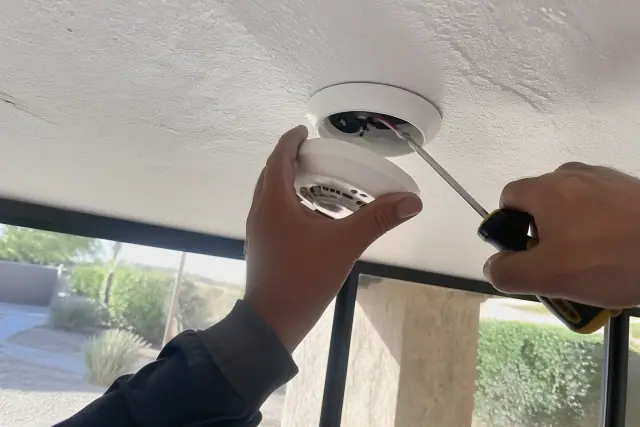
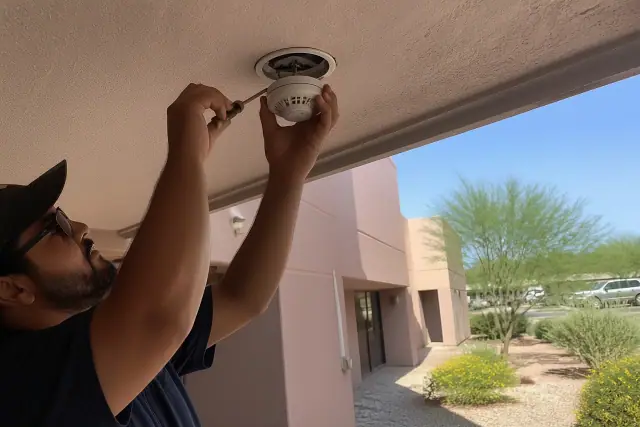
Technician installing a smoke detector on a commercial ceiling in Chandler, AZ.

For new construction and retrofits, crews run conduit, pull cable, mount devices, program panels, and test each device before final inspection. Smaller occupancies may use conventional systems, while larger or phased buildings can benefit from addressable technology. Explore Service

Explore Service

Commercial Fire Alarm Systems

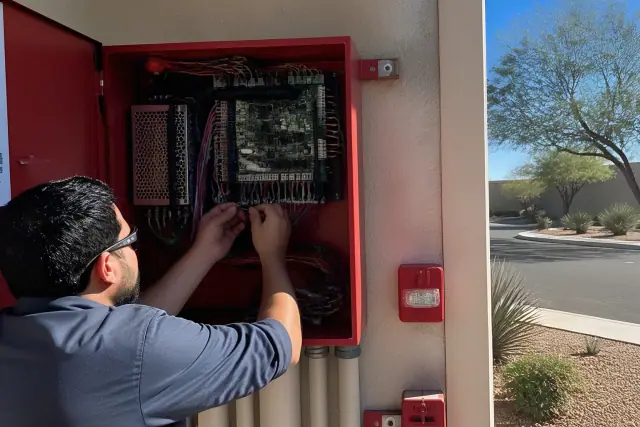
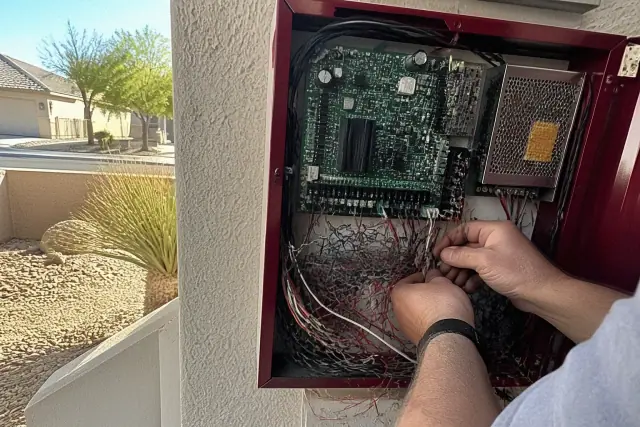
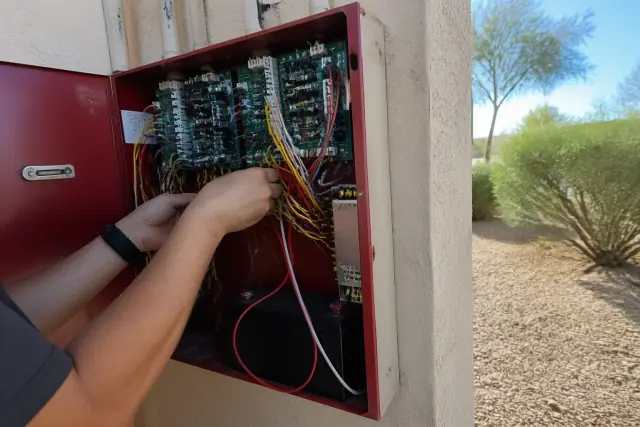
Technician wiring a commercial fire alarm control panel in Chandler, AZ with desert landscaping in the background.

Commercial systems are designed for offices, manufacturing plants, retail centers, and warehouses, including multi-tenant properties near the Price Corridor. Addressable systems provide point-by-point device status and can connect with building management platforms when the project requires it. Explore Service

Explore Service

Fire Alarm Inspection & Testing

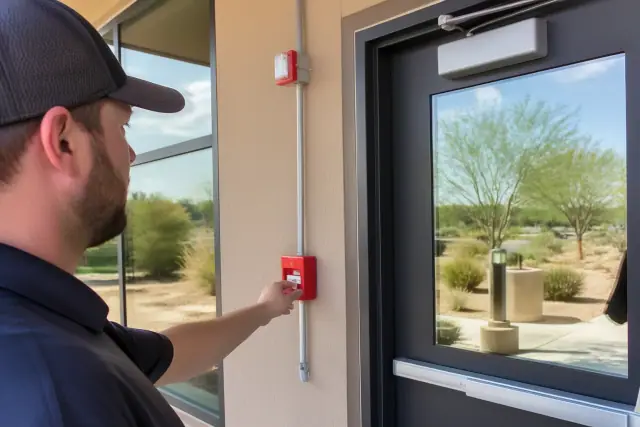
Technician inspecting a red manual fire alarm pull station on a stucco wall in Chandler, AZ.

Annual and semi-annual inspections cover panel function, battery condition, notification appliances, and physical device condition. Technicians test smoke and heat detectors, pull stations, horns, strobes, and duct detectors device by device, then provide standardized NFPA 72 records for compliance and insurance files. Explore Service

Explore Service

Fire Alarm Monitoring

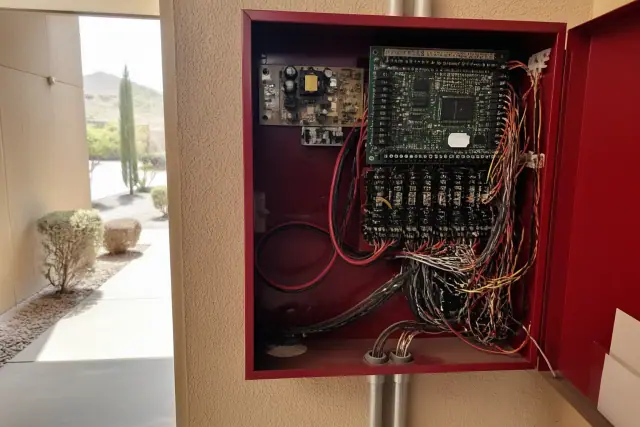
Technician wiring a fire alarm control panel with multicolored circuits in a Chandler, AZ building.

Monitoring connects alarm, trouble, and supervisory signals to a UL-listed central station 24 hours a day. Traditional phone-line, cellular, and network connections are supported for new systems and compatible existing panels, including buildings that no longer use landlines.

Fire Alarm Repair & Troubleshooting

Technician repairing fire alarm system wiring in a control panel at a job site in Chandler, AZ.

Troubleshooting traces trouble signals and ground faults to the device or wiring segment that caused them. The team addresses dust-fouled detectors, heat-stressed attic wiring, monsoon-related connection corrosion, panel faults, wiring breaks, and communication failures, with outside-standard-hours scheduling available for monitored commercial accounts.

Fire Alarm Maintenance

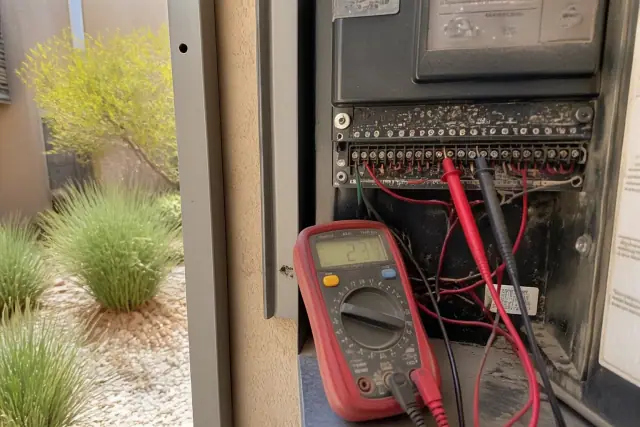
Technician using a multimeter to test voltage at a fire alarm terminal block during maintenance in Chandler, AZ.

Scheduled maintenance keeps detectors clean, batteries within capacity, and firmware current to reduce false alarms and missed detections. Preventive programs can reduce maintenance costs by 12 to 18% compared with reactive repair-only approaches, while service intervals are set according to occupancy and manufacturer requirements.

Fire Alarm System Design

Technician wiring a fire alarm control panel in a building in Chandler, AZ.

Design begins with a site survey, occupancy classification, ceiling heights, HVAC airflow, and existing infrastructure. Whether a building is 5,000 square feet or 200,000 square feet, the layout accounts for detector spacing and site conditions, with stamped drawings, battery and voltage-drop calculations, and a riser diagram prepared for local plan review.

Fire Alarm System Replacement & Upgrades

A technician installing a smoke detector on a commercial ceiling in Chandler, AZ.

Systems often run 10 to 15 years before limited parts availability or code changes make replacement more practical than ongoing repair. Upgrade scopes can migrate conventional zones to addressable devices, add voice evacuation, and move unsupported panels to a current UL 864 ninth-edition platform after evaluating which wiring can be reused.

Fire Alarm Panel Installation & Service

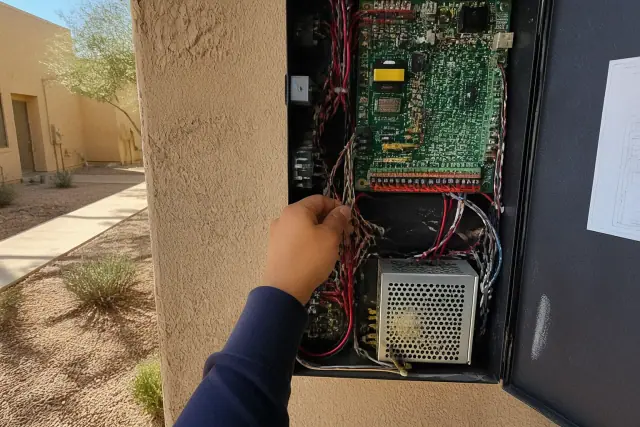
Technician wiring a fire alarm control panel during an installation at a jobsite in Chandler, AZ.

Panel work ranges from conventional two-zone units to networked addressable panels serving multiple buildings on one campus. Installation includes battery sizing, primary and secondary power checks, zone and point programming, and notification-circuit verification; existing panels can also be reprogrammed after floor-plan or occupancy changes.

Voice Evacuation & Mass Notification Systems

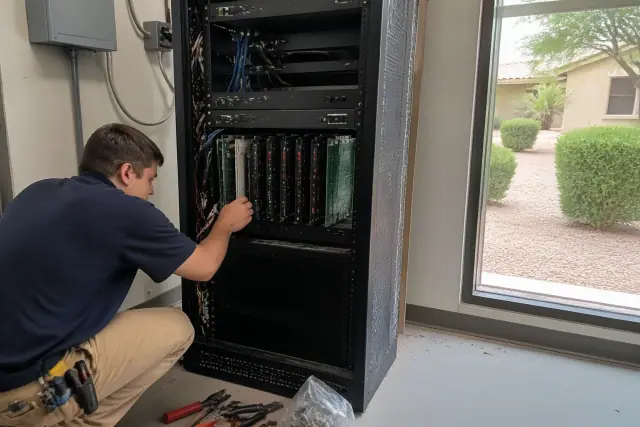
Technician inspecting fire alarm voice evacuation amplifier cards in a server rack at a site in Chandler, AZ.

Voice evacuation combines live and recorded instructions with horns and strobes, while mass notification adds messaging for weather events, lockdowns, and facility-wide announcements. Amplifier and speaker circuits are designed for intelligibility, then tested for audibility in each zone; where practical, mass notification is integrated with the existing fire alarm platform.

System Planning

Choosing the Right Chandler Fire Alarm System

The right solution depends on occupancy classification, building size, device count, panel type, monitoring path, and any need for voice evacuation or mass notification. A site survey should also assess existing wiring, future expansion, ceiling height, airflow, access difficulty, and Chandler's heat and dust conditions before equipment is specified.

Occupancy-Specific Design

Office, manufacturing, retail, warehouse, school, residential, and multi-family settings do not share the same device layouts or notification needs. Start with occupancy classification and building use so detector spacing, appliance coverage, and documentation match the property.

Conventional or Addressable Technology

Conventional systems can suit smaller occupancies, while addressable systems provide point-by-point device status for larger, phased, or multi-tenant buildings. Consider future changes and whether existing wiring can support the selected approach.

Monitoring Connection Options

Confirm whether the property will use a traditional phone line, cellular communicator, or network connection to reach the central station. The selected path must reliably report alarm, trouble, and supervisory events and fit the building's current communications setup.

Voice Evacuation Requirements

High-rise and large assembly occupancies may require voice evacuation under NFPA 72. Review amplifier capacity, speaker zoning, audibility, and intelligibility early, especially in open offices, warehouses, and gymnasiums.

Panel Capacity and Parts Support

Choose a control panel with enough zone or point capacity for the current layout and reasonable expansion. Parts availability, manufacturer support, battery sizing, and UL 864 listing status can determine whether an older panel should be serviced or replaced.

Inspection and Documentation Needs

Plan for the inspection frequency, standardized test reports, as-built drawings, and device inventory the property must retain. Clear records help with Chandler Fire review, insurance documentation, and faster future service.

Chandler Fire Alarm Issues

Common Fire Alarm Problems in Chandler Properties

Chandler's dry heat, monsoon dust, humidity swings, power surges, and large industrial loads can expose weak points in detectors, wiring, panels, and communications. Trouble signals, false alarms, or incomplete reporting should be traced and documented before they become larger compliance and safety concerns.

Request System Inspection

Dust-Fouled Smoke Detectors

Desert dust can contaminate smoke detectors, alter sensitivity, and contribute to false alarms or missed detection. Cleaning and device-by-device testing reveal whether a detector can remain in service or should be replaced.

Heat-Stressed Wiring

Unconditioned attic spaces and extreme summer heat can stress cable jackets, terminations, and other electrical components. Troubleshooting should isolate the affected wiring segment instead of relying on trial-and-error parts replacement.

Panel Trouble and Ground Faults

A trouble display or ground fault may originate at a device, notification circuit, battery, communicator, or damaged wire. Technicians trace the signal path and verify repair at the panel and connected monitoring station.

Monsoon Power Surges

Monsoon-season power surges can damage panel boards or leave intermittent faults that are hard to diagnose. Primary and secondary power verification, battery checks, and circuit testing help identify the scope of repair.

Communication Failures

Dropped landlines, failed cellular communicators, or network issues can prevent signals from reaching the central station. Testing should confirm alarm, trouble, and supervisory events arrive correctly and that designated contacts receive the expected reports.

Aging, Unsupported Equipment

Older panels can become difficult to maintain when parts are unavailable or the platform no longer meets the project's needs. A replacement assessment compares continued repair with an addressable upgrade and identifies reusable wiring before work begins.

Why Choose Us

Why Choose Phoenix Fire Alarm Systems in Chandler?

Phoenix Fire Alarm Systems brings Chandler-specific planning together with licensed installation, certified technician training, NFPA 72 documentation, and coordination with the Chandler Fire, Health & Medical Department and Building Safety Division. Working alarms are associated with roughly a 48% reduction in home fire mortality, underscoring why design, testing, maintenance, and clear compliance records matter for life-safety systems.

Local Permit Coordination

The team prepares permit submittals, works through plan review, and schedules final inspection with the city. That keeps approved drawings, installation work, and acceptance testing aligned instead of leaving owners to interpret code language alone.

Licensed, Certified Technicians

The team carries Arizona Registrar of Contractors licensing and certified fire alarm training needed to pull permits and document testing. Technicians account for Chandler's heat, dust, airflow, and industrial electrical noise when planning device placement and wiring methods.

Clear Pricing and Project Records

Projects are priced after the site survey, with device count, panel type, access conditions, and communication features defining the scope. Owners receive test reports and, for commercial installations, as-built drawings and a device inventory for compliance files and future service.

From Survey to Sign-Off

Our Fire Alarm Installation Process in Chandler

A Chandler fire alarm project moves through site discovery, code-based design, plan review, coordinated installation, programming, and witnessed acceptance testing. Each stage documents decisions so the approved layout, field work, and final records remain consistent.

01.

On-Site Property Walkthrough

Document occupancy type, square footage, ceiling heights, HVAC airflow, access conditions, and existing panels, wiring, and devices. The walkthrough also identifies construction phasing and any need to keep an occupied building operating during upgrades.

02.

Occupancy and Code Review

Review the building's occupancy classification and applicable NFPA 72, International Fire Code, and City of Chandler requirements. This determines the required system functions, monitoring, notification approach, and plan-review path.

03.

Device Layout and Calculations

Lay out smoke and heat detectors, pull stations, horns, strobes, duct detectors, and other notification appliances. Complete battery sizing, voltage-drop calculations, device spacing, speaker circuits, and the riser diagram for the selected system.

04.

Plan Submittal and Approval

Prepare stamped drawings and supporting calculations for the Chandler Building Safety Division. Resolve plan-review comments and confirm the approved scope before field installation proceeds.

05.

Installation and Programming

Run conduit and cable, mount devices, install and program the panel, and coordinate rough-in with architects, electricians, and general contractors. For occupied sites, phase work zone by zone to limit operational disruption.

06.

Acceptance Testing and Closeout

Test every initiating device, notification appliance, and monitoring connection before final inspection witnessed by Chandler Fire. Closeout includes documented results and, for commercial work, as-built drawings and a device inventory.

Property Applications

Fire Alarm Outcomes for Chandler Properties and Businesses

Case Study 1: Commercial Facilities: Office buildings, manufacturing plants, retail centers, and warehouses can use addressable device reporting, phased installation, and central-station monitoring to manage complex layouts without relying on a single zone check.

Case Study 2: Occupied Upgrades: Zone-by-zone scheduling lets an operating facility replace panels or add devices while limiting shutdowns. Reused wiring is evaluated first, and the upgraded system receives a complete inspection and test cycle before sign-off.

Case Study 3: Residential and Multi-Family Properties: System layouts are sized to the home or building rather than a one-size-fits-all device count. Monitored, multi-device designs can combine detection and notification with documentation appropriate to the property type.

Plan Your Fire Alarm Project

Schedule a Chandler Fire Alarm
System
Consultation

Talk with Phoenix Fire Alarm Systems about a Chandler installation, inspection, monitoring connection, repair, maintenance plan, design, or upgrade. A site survey defines the building conditions, device count, panel needs, and documentation required for a detailed project quote.

Chandler Fire Alarm Help

Fire Alarm FAQs for Chandler, AZ

These answers cover common questions about Chandler fire alarm costs, system types, inspections, monitoring, permitting, repairs, and service coverage. A site survey is the best way to match general guidance to your property's occupancy, layout, and existing equipment.

Call Our Fire Alarm Team

Cost depends on building size, device count, wiring access, panel type, and whether monitoring, voice evacuation, or mass notification is included. Basic residential installations can start around $540, while fully monitored, multi-device residential systems can cost $5,000 or more; commercial fire alarm labor can range from $100 to $400 per hour, with total project cost established after a site survey.

Conventional systems group devices into zones and can fit smaller occupancies. Addressable systems report the status of individual devices, which is useful for larger, phased, multi-tenant, or multi-building properties.

Annual and semi-annual inspections are used for commercial occupancies under NFPA 72, depending on the component and required schedule. The inspection covers panel function, batteries, device condition, notification appliances, and documented test results.

Monitoring is required for most commercial occupancies under NFPA 72 and Chandler's adopted fire code. A review of the occupancy and system design confirms the exact monitoring obligation for a specific property.

Yes. In addition to traditional phone-line monitoring, compatible systems can use cellular or network communications to reach a UL-listed central station. Testing must confirm that alarm, trouble, and supervisory signals report correctly.

Fire alarm systems often operate for 10 to 15 years before parts availability and code changes make replacement more practical than continued repair. An assessment should review panel support, existing wiring, occupancy changes, and whether an addressable or voice-capable upgrade is needed.

Design starts with a site survey and occupancy review, followed by device layouts, detector spacing, battery sizing, voltage-drop calculations, a riser diagram, and stamped drawings. The package is coordinated for Chandler plan review before installation.

Testing covers the panel, smoke detectors, heat detectors, pull stations, horns, strobes, duct detectors, batteries, notification circuits, and monitoring connection as applicable. Each initiating device and notification appliance is verified individually and recorded in the test report.

Phoenix Fire Alarm Systems prepares permit submittals, coordinates plan review with the Chandler Building Safety Division, and schedules final inspection with Chandler Fire. Commercial acceptance testing is completed before project closeout records are delivered.

Dry heat can stress electrical components, desert dust can foul smoke detectors, humidity spikes can affect connections, and monsoon power surges can damage panel boards. Device placement, sensitivity, maintenance intervals, wiring methods, and power checks should account for those conditions.

Voice evacuation uses recorded or live instructions with speakers, horns, and strobes to direct occupants during a fire emergency. Mass notification adds messaging for events such as severe weather, lockdowns, or facility-wide announcements and can often integrate with the fire alarm platform.

Yes. Technicians trace the condition to the specific device, wiring segment, battery, notification circuit, or communication path instead of replacing parts by guesswork. Repair is verified at the panel and, when monitored, at the central station.

Monitoring is available for compatible existing panels from other installers, and existing panels can be serviced or reprogrammed when a floor plan or occupancy changes. A site review determines compatibility, condition, communications options, and available replacement parts.

Yes. Residential work includes single-family homes, HOA-managed communities, and multi-family buildings that need code-compliant detection and notification. The device count and monitoring approach are sized to the property's layout rather than a one-size-fits-all package.

Chandler coverage includes Downtown Chandler, Ocotillo, Sun Groves, Fulton Ranch, Chandler Fashion Center, Price Road, and Chandler Boulevard. The supported surrounding area includes Gilbert, Tempe, Mesa, Sun Lakes, and other East Valley communities.