Proudly serving Phoenix, Mesa, Glendale, Scottsdale, Tempe, Chandler & surrounding areasCall or Text 24/7: 602-449-8143
Guides

What Should You Look for in an Alarm Service Technician?

Phoenix Fire Alarm Systems recommends judging an alarm service technician by verified credentials, panel-specific training, code knowledge, hands-on troubleshooting, and clear documentation-not the lowest bid alone. The technician should be able to match their experience to your Phoenix building and fire alarm system, explain findings plainly, and show the licensing and insurance behind the work.

Quick Summary

  • Look for NICET Fire Alarm Systems certification at Level II or higher plus current training for the panel installed in your building.
  • Verify the contractor's active Arizona ROC license and current general liability and workers' compensation coverage before work begins.
  • Confirm working knowledge of NFPA 72, NEC Article 760, and Phoenix Fire Department life safety and inspection requirements.
  • Compare hands-on experience with your system and occupancy, the quality of past reports and references, and clearly defined response commitments.

Alarm Technician Checklist

Credential Verification

Ask for NICET Fire Alarm Systems certification from Level II through IV, manufacturer-specific training certificates, the contractor's active Arizona ROC license number, and current insurance certificates. Credible providers should make this documentation available before work starts.

Relevant System Experience

Match the technician's field experience to your building and equipment. Ask about addressable and conventional panels, networked systems, voice evacuation, mass notification, panel programming, and the occupancy types they have serviced.

Service Record and Communication

Review sample inspection reports, local commercial references, and response-time terms. Strong technicians document devices individually, explain findings and consequences in plain language, and define the corrective scope before asking for approval.

On-Site Inspection Evidence

Reading a Fire Alarm Riser Diagram

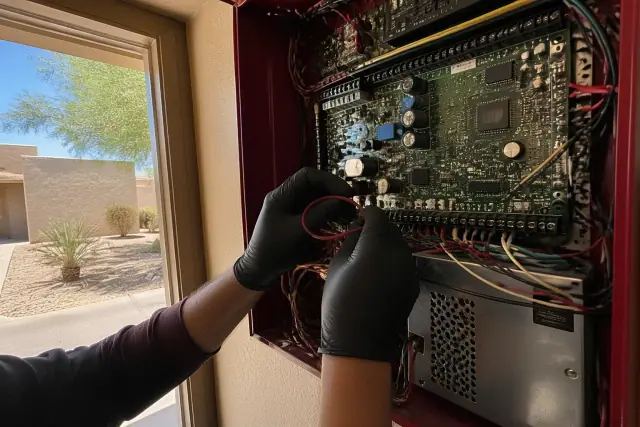
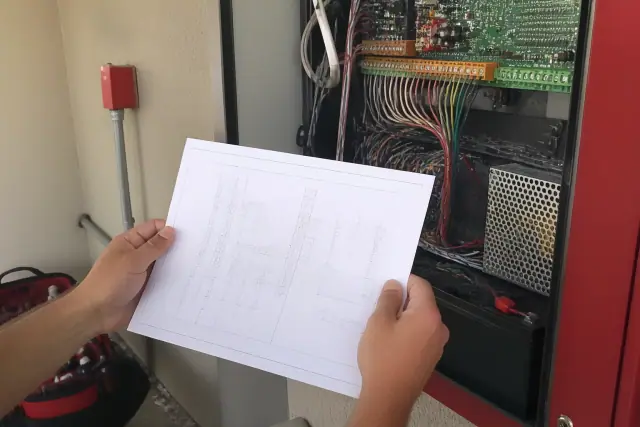
Technician wiring a fire alarm control panel with a riser diagram on a jobsite in Phoenix, AZ.

A technician tracing circuits on a riser diagram beside the installed panel. This demonstrates the system-level reading skills needed before testing or changing devices.

Systematic Ground-Fault Testing

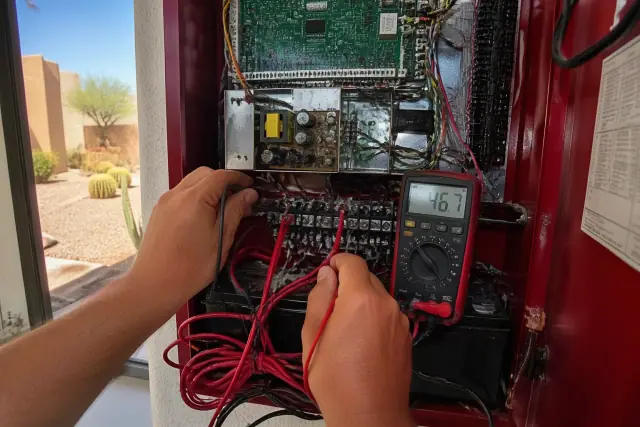
Handheld multimeter testing terminal block pins inside a fire alarm cabinet in Phoenix, AZ.

Meter-based troubleshooting at a fire alarm panel rather than guesswork. In Phoenix monsoon conditions, pool rooms, sprinkler flow switches, and outdoor notification devices are practical places to investigate nuisance alarms and ground faults.

Device-by-Device Inspection Report

Technician using a jumper wire to test circuits in a fire alarm panel in Phoenix, AZ.

A clear inspection report listing device locations, test results, deficiencies, and code references. Detailed records make repair decisions easier to review than a vague pass-or-fail note.

Technician Screening Snapshot

Credentials to Verify

Confirm NICET Level II or higher, manufacturer-specific panel training, an active Arizona ROC license for the contractor, and current liability and workers' compensation certificates.

Technical Knowledge

Ask how NFPA 72 and NEC Article 760 affect testing, documentation, wiring methods, conductor sizing, device spacing, and notification-appliance candela ratings. The technician should also be comfortable with battery calculations and voltage-drop worksheets.

Relevant Field Experience

Look for completed work on building and system types like yours, including residential, mid-rise commercial, industrial, addressable, conventional, networked, voice evacuation, or mass notification systems as applicable.

Communication and Documentation

Expect a written scope with device counts and code references, readable inspection records, realistic response terms, and plain-language explanations of the finding, cost, consequence, and recommended correction.

Alarm Technician Vetting Matrix

CheckStrong EvidenceWarning Sign
CredentialsNICET Level II or higher, panel training, active contractor ROC license, and current insuranceClaims without documents
Technical interviewExplains NFPA 72, NEC Article 760, and a methodical approach to a ground fault on a 40-zone systemVague answers or parts-swapping guesses
Relevant fieldworkRecent work on the same panel type and a similar building occupancyOnly general security or low-voltage experience
Service recordDevice-level reports, commercial references, and defined response commitmentsOne-line reports or an unclear scope

What a Qualified Technician Demonstrates

A qualified fire alarm technician combines formal training and supervised field time with the ability to read riser diagrams, check battery calculations and voltage-drop worksheets, program panels, and isolate ground faults or open circuits systematically. They should explain why a device failed, show the supporting code or test result, and document a corrective scope rather than merely clearing a trouble light.

Factors That Change the Choice

Building occupancy, panel generation, wiring age, system architecture, access hours, and the service scope all change which technician is the right fit. Phoenix covers 517.9 square miles within a metro area estimated at 5.19 million residents, so familiarity with Maricopa County permitting, Phoenix Fire Department inspection cycles, and realistic response commitments can matter alongside technical specialization.

Common Follow-Up Questions

Pricing and response time are common follow-ups. Employed technician labor commonly falls in the $18 to $40 per hour range, while customer-facing billed service can be higher and sometimes near $150 per hour for the first technician; after-hours trip charges can run around $300 plus an elevated hourly rate. Annual inspection and maintenance contracts for small commercial buildings typically run $300 to $2,000 depending on system size and device count. Response timing varies by agreement and system criticality, while a failed inspection should produce a device-level deficiency list, code references, a corrective plan, and any required reinspection.
Ask a Phoenix Fire Alarm Pro

Need Help Vetting a Technician?

Share your building type, panel or system type, and current service need. Before approving work, ask for credentials, a written scope with device counts and code references, and an explanation of the reporting and response terms.